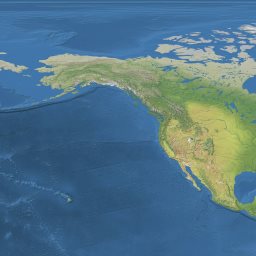
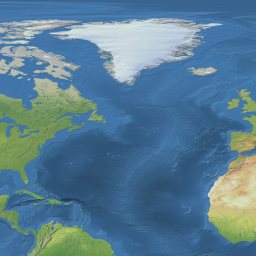
Quo Fuit places 4 dated presences for Isaac Newton across 3 places, from 1679 to 1727.
Each one keeps the sentence it was taken from and a link to its source.
Sir Isaac Newton was an English polymath who was a mathematician, physicist, astronomer, alchemist, theologian, author and inventor.Wikipedia, full article · CC BY-SA
Every dot is a place Isaac Newton is documented in, on a dated record. The interactive globe carries the full detail.
Where Isaac Newton was documented, and when
1679year
Royal Societyattested“However, the two had brief exchanges in 1679–80, when Hooke, who had been appointed Secretary of the Royal Society, opened a correspondence intended to elicit contributions from Newton to Royal Society transactions, which had the effect…”source: Wikipedia: Isaac Newton
1696year
Londonattested“Newton moved to London to take up the post of Warden of the Mint during the reign of King William III in 1696, a position that he had obtained through the patronage of Charles Montagu, 1st Earl of Halifax, then Chancellor of the Exchequer.”source: Wikipedia: Isaac Newton
April 1705month
Trinity College, Cambridgeattested“In April 1705, Newton was knighted by Queen Anne during a royal visit to Trinity College, Cambridge.”source: Wikipedia: Isaac Newton
20 March 1727exact date
Londonattested“Newton died in his sleep in London on 20 March 1727 (NS 31 March 1727), aged 84.”source: Wikipedia: Isaac Newton
Open Quo Fuit to see these 4 presences on the
globe, filter them by date, and follow the journey year by year.
In each of these, a source puts Isaac Newton and the place in the same dated sentence without stating
that Isaac Newton was there. They are kept apart from the timeline above for exactly that reason:
a mention is not a presence, and Quo Fuit does not quietly promote one into the other.
June 1661month
University of Cambridgementioned“In June 1661, Newton was admitted to Trinity College at the University of Cambridge.”source: Wikipedia: Isaac Newton
June 1661month
Trinity College, Cambridgementioned“In June 1661, Newton was admitted to Trinity College at the University of Cambridge.”source: Wikipedia: Isaac Newton
1664year
University of Cambridgementioned“At Cambridge, Newton started as a subsizar, paying his way by performing valet duties until he was awarded a scholarship in 1664, which covered his university costs for four more years until the completion of his MA.”source: Wikipedia: Isaac Newton
1665year
Londonmentioned“Newton's analysis of this book, which he made in Cambridge while protecting himself from London's 1665–66 epidemic of the bubonic plague, is the most substantial written statement he is known to have made about the plague, according to B…”source: Wikipedia: Isaac Newton
August 1665month
University of Cambridgementioned“Soon after Newton obtained his BA degree at Cambridge in August 1665, the university temporarily closed as a precaution against the Great Plague.”source: Wikipedia: Isaac Newton
April 1667month
University of Cambridgementioned“In April 1667, Newton returned to the University of Cambridge, and in October he was elected as a fellow of Trinity.”source: Wikipedia: Isaac Newton
1672year
University of Cambridgementioned“In a 1672 text, Newton recounted watching tennis players at Cambridge college and noted how a tennis ball struck obliquely with a spinning motion curved in flight.”source: Wikipedia: Isaac Newton
December 1684month
Royal Societymentioned“He shared his results with Edmond Halley and the Royal Society in , a tract written on about nine sheets which was copied into the Royal Society's Register Book in December 1684.”source: Wikipedia: Isaac Newton
1689year
Londonmentioned“Voltaire, who was in London at the time of Newton's funeral, said that he "was never sensible to any passion, was not subject to the common frailties of mankind, nor had any commerce with women—a circumstance which was assured me by the…”source: Wikipedia: Isaac Newton
1699year
Royal Societymentioned“In 1699, Newton presented an improved version of his reflecting quadrant, or octant, that he had previously designed to the Royal Society.”source: Wikipedia: Isaac Newton
1704year
Royal Societymentioned“In 1704, Newton constructed and presented a burning mirror to the Royal Society.”source: Wikipedia: Isaac Newton
1708year
Royal Societymentioned“The mathematician John Keill accused Leibniz of plagiarism in 1708 in the Royal Society journal, thereby deteriorating the situation even more.”source: Wikipedia: Isaac Newton
Two people documented in the same place in the same year is a correlation, not a meeting.
Quo Fuit will never say they met without a source that says so.
How to read this page
Every line above is a dated fact taken from a source, with the sentence it came from and a link
back to it. Nothing is inferred, and a gap in the record is not evidence that someone was elsewhere.
A tag says how the fact is carried by its source: documented a structured,
explicitly dated record, attested a sentence that states the person was there,
mentioned a sentence that ties the person to the place without stating presence.
Sentences quoted from Wikipedia are available under CC BY-SA 4.0. Public domain books come from
Project Gutenberg. Quo Fuit claims no rights over these sources.
See Isaac Newton on a 3D globe, filter the record by date, and cross this life with another to find
where the two overlap.