Quo Fuit places 3 dated presences for Ion Antonescu across 3 places, from 1940 to 1942.
Each one keeps the sentence it was taken from and a link to its source.
Ion Antonescu (– 1 June 1946) was a Romanian military officer and marshal who presided over two successive wartime dictatorships as Prime Minister and Conducător during most of World War II.Wikipedia, full article · CC BY-SA
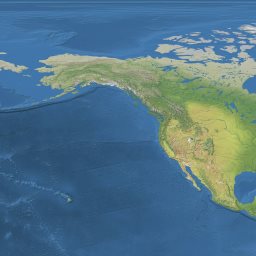
Every dot is a place Ion Antonescu is documented in, on a dated record. The interactive globe carries the full detail.
Where Ion Antonescu was documented, and when
1940 to 1943period
Wehrmachtattested“Many young German Romanian men opted to join the Schutzstaffel as early as 1940 and, in 1943, an accord between Antonescu and Hitler automatically sent ethnic Germans of recruitable age into the Wehrmacht.”source: Wikipedia: Ion Antonescu
31 December 1941exact date
Bogdanovcaattested“As far I am concerned, 100 may die, 1,000 may die, all of them may die" Between 21–24 and 28–31 December 1941, Romanian gendarmes and Ukrainian auxiliaries killed about 70,000 Jews at the Bogdanovca camp; the massacre was Antonescu's way…”source: Wikipedia: Ion Antonescu
August 1942month
Polandattested“In August 1942, Antonescu had worked out plans with the SS for deporting all of the Jews of the Regat or the "Old Kingdom" to the German-run death camps in Poland, but then cancelled the deportation.”source: Wikipedia: Ion Antonescu
Open Quo Fuit to see these 3 presences on the
globe, filter them by date, and follow the journey year by year.
In each of these, a source puts Ion Antonescu and the place in the same dated sentence without stating
that Ion Antonescu was there. They are kept apart from the timeline above for exactly that reason:
a mention is not a presence, and Quo Fuit does not quietly promote one into the other.
1913year
Dobrujamentioned“In 1913, during the Second Balkan War against Bulgaria, Antonescu served as a staff officer in the First Cavalry Division in Dobruja.”source: Wikipedia: Ion Antonescu
1919year
Transylvaniamentioned“He participated in the political campaign to earn recognition at the Paris Peace Conference of 1919 for Romania's gains in Transylvania.”source: Wikipedia: Ion Antonescu
1919year
Parismentioned“He participated in the political campaign to earn recognition at the Paris Peace Conference of 1919 for Romania's gains in Transylvania.”source: Wikipedia: Ion Antonescu
Romaniamentioned“After returning to Romania in 1926, Antonescu resumed his teaching in Sibiu, and, in the autumn of 1928, became Secretary-General of the Defence Ministry in the Vintilă Brătianu cabinet.”source: Wikipedia: Ion Antonescu
1926 to 1928period
Sibiumentioned“After returning to Romania in 1926, Antonescu resumed his teaching in Sibiu, and, in the autumn of 1928, became Secretary-General of the Defence Ministry in the Vintilă Brătianu cabinet.”source: Wikipedia: Ion Antonescu
1940year
Soviet Unionmentioned“In 1940, two of Romania's regions, Bessarabia and Northern Bukovina, were lost to a Soviet occupation consented to by the king.”source: Wikipedia: Ion Antonescu
1940year
Bistrița Monasterymentioned“Angered by the territorial losses of 1940, General Antonescu sent Carol a general note of protest, and, as a result, was arrested and interned at Bistrița Monastery.”source: Wikipedia: Ion Antonescu
1940year
Bucharestmentioned“On 6 October, he presided over the Iron Guard's mass rally in Bucharest, one in a series of major celebratory and commemorative events organized by the movement during the late months of 1940.”source: Wikipedia: Ion Antonescu
1940year
Bessarabianmentioned“Romania's campaign on the Eastern Front began without a formal declaration of war, and was consecrated by Antonescu's statement: "Soldiers, I order you, cross the Prut River" (in reference to the Bessarabian border between Romania and po…”source: Wikipedia: Ion Antonescu
June 1940month
Romaniamentioned“Commenting on Antonescu's ambivalent stance, Hitler's minister to Romania, Wilhelm Fabricius, wrote to his superiors: "I am not convinced that he is a safe man." Romania's elite had been intensely Francophile ever since Romania had won i…”source: Wikipedia: Ion Antonescu
January 1941month
Bucharestmentioned“The Antonescu-Sima dispute erupted into violence in January 1941, when the Iron Guard instigated a series of attacks on public institutions and a pogrom, incidents collectively known as the "Legionary Rebellion." This came after the myst…”source: Wikipedia: Ion Antonescu
1941year
Transnistriamentioned“In the fall of 1941, Antonescu planned to deport all of the Jews of the Regat, southern Bukovina and southern Transylvania into Transnistria as the prelude to killing them, but this operation was vetoed by Germany, who complained that An…”source: Wikipedia: Ion Antonescu
June 1941month
Germanymentioned“Antonescu traveled to Germany and met Hitler on eight more occasions between June 1941 and August 1944.”source: Wikipedia: Ion Antonescu
Every line above is a dated fact taken from a source, with the sentence it came from and a link
back to it. Nothing is inferred, and a gap in the record is not evidence that someone was elsewhere.
A tag says how the fact is carried by its source: documented a structured,
explicitly dated record, attested a sentence that states the person was there,
mentioned a sentence that ties the person to the place without stating presence.
Sentences quoted from Wikipedia are available under CC BY-SA 4.0. Public domain books come from
Project Gutenberg. Quo Fuit claims no rights over these sources.
See Ion Antonescu on a 3D globe, filter the record by date, and cross this life with another to find
where the two overlap.