Quo Fuit places 5 dated presences for Hu Shih across 4 places, from 1892 to 1957.
Each one keeps the sentence it was taken from and a link to its source.
Hu Shih (17 December 1891 to 24 February 1962) was a Chinese academic, writer, diplomat, and politician.Wikipedia, full article · CC BY-SA
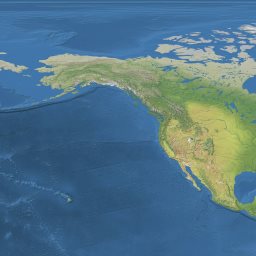
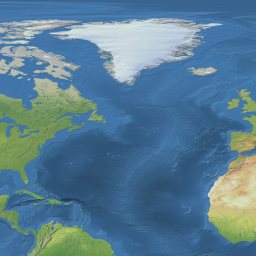
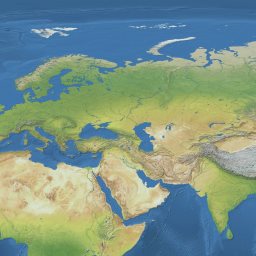
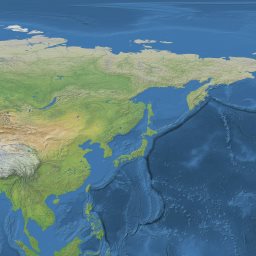
Every dot is a place Hu Shih is documented in, on a dated record. The interactive globe carries the full detail.
Where Hu Shih was documented, and when
1892 to 1893period
Taiwanattested“After Hu Shih's birth, Hu Chuan moved to Taiwan to work in 1892, where his wife and Hu Shih joined him in 1893.”source: Wikipedia: Hu Shih
1895year
Taiwanattested“Shortly before Hu Chuan's death in 1895, his wife Feng and the young Hu Shih left Taiwan for their ancestral home in Anhui.”source: Wikipedia: Hu Shih
1895year
Anhuiattested“Shortly before Hu Chuan's death in 1895, his wife Feng and the young Hu Shih left Taiwan for their ancestral home in Anhui.”source: Wikipedia: Hu Shih
16 August 1910exact date
United Statesattested“On 16 August 1910, he was sent to study agriculture at Cornell University in the United States.”source: Wikipedia: Hu Shih
1957year
Taipeiattested“In 1957, he became the third president of the Academia Sinica in Taipei, a post he retained until his death.”source: Wikipedia: Hu Shih
Open Quo Fuit to see these 5 presences on the
globe, filter them by date, and follow the journey year by year.
In each of these, a source puts Hu Shih and the place in the same dated sentence without stating
that Hu Shih was there. They are kept apart from the timeline above for exactly that reason:
a mention is not a presence, and Quo Fuit does not quietly promote one into the other.
1919 to 1921period
Chinamentioned“Hu became Dewey's translator and a lifelong advocate of pragmatic evolutionary change, helping Dewey in his 1919–1921 lectures series in China.”source: Wikipedia: Hu Shih
1921year
Chinamentioned“As his biographer Jerome Grieder put it, Hu's approach to China's "distinctive civilization" was "thoroughly critical but by no means contemptuous." For instance, he studied Chinese classical novels, especially the 18th century novel Dre…”source: Wikipedia: Hu Shih
1922year
Chinamentioned“Hu was among the New Culture Movement reformers who welcomed Margaret Sanger's 1922 visit to China.”source: Wikipedia: Hu Shih
1932 to 1936period
American Academy of Arts and Sciencesmentioned“He was elected to the American Academy of Arts and Sciences in 1932 and the American Philosophical Society in 1936.”source: Wikipedia: Hu Shih
1938 to 1942period
United Statesmentioned“Hu was the Republic of China's ambassador to the United States from 1938 to 1942.”source: Wikipedia: Hu Shih
1950 to 1951period
Genevamentioned“Along with Albert Einstein, Hu was one of the sponsors of the Peoples' World Convention (PWC), also known as Peoples' World Constituent Assembly (PWCA), which took place from 1950 to 1951 at Palais Electoral in Geneva, Switzerland.”source: Wikipedia: Hu Shih
Two people documented in the same place in the same year is a correlation, not a meeting.
Quo Fuit will never say they met without a source that says so.
How to read this page
Every line above is a dated fact taken from a source, with the sentence it came from and a link
back to it. Nothing is inferred, and a gap in the record is not evidence that someone was elsewhere.
A tag says how the fact is carried by its source: documented a structured,
explicitly dated record, attested a sentence that states the person was there,
mentioned a sentence that ties the person to the place without stating presence.
Sentences quoted from Wikipedia are available under CC BY-SA 4.0. Public domain books come from
Project Gutenberg. Quo Fuit claims no rights over these sources.
See Hu Shih on a 3D globe, filter the record by date, and cross this life with another to find
where the two overlap.