Quo Fuit places 4 dated presences for Henry Fielding across 3 places, from 1707 to 1729.
Each one keeps the sentence it was taken from and a link to its source.
Henry Fielding (22 April 1707 – 8 October 1754) was an English writer and judge known for the use of humour and satire in his works.Wikipedia, full article · CC BY-SA
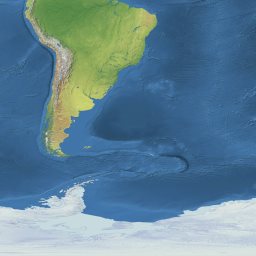
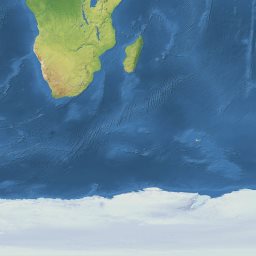
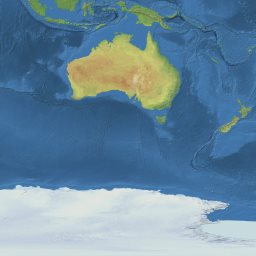
Every dot is a place Henry Fielding is documented in, on a dated record. The interactive globe carries the full detail.
Where Henry Fielding was documented, and when
22 April 1707exact date
Sharphamattested“Henry Fielding was born on 22 April 1707 at Sharpham Park, the seat of his mother's family in Sharpham, Somerset.”source: Wikipedia: Henry Fielding
1728year
Leidenattested“In 1728, Fielding travelled to Leiden to study classics and law at the university.”source: Wikipedia: Henry Fielding
1729year
Leidenattested“Returning from his studies at Leiden late in 1729, Fielding “came up to London … thrown upon his own resources” and determined to earn his living by the pen.”source: Wikipedia: Henry Fielding
1729year
Londonattested“Returning from his studies at Leiden late in 1729, Fielding “came up to London … thrown upon his own resources” and determined to earn his living by the pen.”source: Wikipedia: Henry Fielding
Open Quo Fuit to see these 4 presences on the
globe, filter them by date, and follow the journey year by year.
In each of these, a source puts Henry Fielding and the place in the same dated sentence without stating
that Henry Fielding was there. They are kept apart from the timeline above for exactly that reason:
a mention is not a presence, and Quo Fuit does not quietly promote one into the other.
1731 to 1732period
Englandmentioned“Eventually revived in rep with Don Quixote in England * The Mock Doctor: or The Dumb Lady Cur'd (1732), adapted from Molière's Le Médecin malgré lui, played in rep with The Old Debauchees, as a replacement for The Covent-Garden Tragedy *…”source: Wikipedia: Henry Fielding
1733year
Englandmentioned“As It Is Performing at the New Theatre in the Hay-Market, (1733) written by Eliza Haywood and William Hatchett, music by Thomas Arne, adapted from the Fielding * Tom Thumb the Great: A Burlesque Tragedy from Fielding (1805–1810), written…”source: Wikipedia: Henry Fielding
1734year
Church of St Mary, Charlcombementioned“Fielding married Charlotte Craddock in 1734 at the Church of St Mary in Charlcombe, Somerset.”source: Wikipedia: Henry Fielding
1734year
Charlcombementioned“Fielding married Charlotte Craddock in 1734 at the Church of St Mary in Charlcombe, Somerset.”source: Wikipedia: Henry Fielding
1734 to 1770period
Englandmentioned“Seedo." * The Intriguing Chambermaid (1734), after Jean-François Regnard * An Old Man Taught Wisdom, or The Virgin Unmasked, A Farce (1734), ballad opera * Don Quixote in England (1734), ballad opera * The Miser (1735), incidental music…”source: Wikipedia: Henry Fielding
1743 to 1755period
Lisbonmentioned“*Miscellanies – collection of works, 1743, contained the poem "Part of Juvenal's Sixth Satire, Modernized in Burlesque Verse" *"Examples of the interposition of Providence in the Detection and Punishment of Murder containing above thirty…”source: Wikipedia: Henry Fielding
1754year
Portugalmentioned“Gout, asthma and cirrhosis of the liver left him on crutches, and with other afflictions sent him to Portugal in 1754 to seek a cure.”source: Wikipedia: Henry Fielding
Two people documented in the same place in the same year is a correlation, not a meeting.
Quo Fuit will never say they met without a source that says so.
How to read this page
Every line above is a dated fact taken from a source, with the sentence it came from and a link
back to it. Nothing is inferred, and a gap in the record is not evidence that someone was elsewhere.
A tag says how the fact is carried by its source: documented a structured,
explicitly dated record, attested a sentence that states the person was there,
mentioned a sentence that ties the person to the place without stating presence.
Sentences quoted from Wikipedia are available under CC BY-SA 4.0. Public domain books come from
Project Gutenberg. Quo Fuit claims no rights over these sources.
See Henry Fielding on a 3D globe, filter the record by date, and cross this life with another to find
where the two overlap.