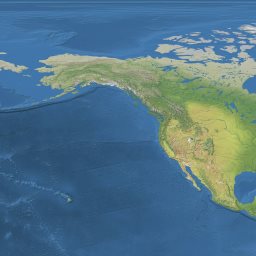
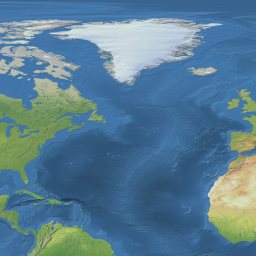
Quo Fuit places 7 dated presences for Heinrich Hertz across 6 places, from 1857 to 1894.
Each one keeps the sentence it was taken from and a link to its source.
Heinrich Rudolf Hertz (22 February 1857 – 1 January 1894) was a German physicist who first conclusively proved the existence of the electromagnetic waves proposed by James Clerk Maxwell's equations of electromagnetism.Wikipedia, full article · CC BY-SA
Every dot is a place Heinrich Hertz is documented in, on a dated record. The interactive globe carries the full detail.
Where Heinrich Hertz was documented, and when
22 February 1857exact date
Hamburgattested“Heinrich Rudolf Hertz was born on 22 February 1857 in Hamburg, the son of Gustav Ferdinand Hertz, a lawyer and politician, and Anna Elisabeth Pfefferkorn.”source: Wikipedia: Heinrich Hertz
1878year
Munichattested“Hertz always had a deep interest in meteorology, probably derived from his contacts with Wilhelm von Bezold (who was his professor in a laboratory course at the Munich Polytechnic in the summer of 1878).”source: Wikipedia: Heinrich Hertz
1885year
University of Karlsruheattested“In 1885, Hertz became a full professor at the University of Karlsruhe.”source: Wikipedia: Heinrich Hertz
3 April 1889exact date
University of Bonnattested“Hertz became a professor of physics and director of the physics institute at the University of Bonn on 3 April 1889, a position he held until his death.”source: Wikipedia: Heinrich Hertz
1 January 1894exact date
Hamburgattested“He died on 1 January 1894 in Bonn, aged 36, and is buried in the Ohlsdorf Cemetery in Hamburg.”source: Wikipedia: Heinrich Hertz
1 January 1894exact date
Bonnattested“He died on 1 January 1894 in Bonn, aged 36, and is buried in the Ohlsdorf Cemetery in Hamburg.”source: Wikipedia: Heinrich Hertz
1 January 1894exact date
Ohlsdorf Cemeteryattested“He died on 1 January 1894 in Bonn, aged 36, and is buried in the Ohlsdorf Cemetery in Hamburg.”source: Wikipedia: Heinrich Hertz
Open Quo Fuit to see these 7 presences on the
globe, filter them by date, and follow the journey year by year.
In each of these, a source puts Heinrich Hertz and the place in the same dated sentence without stating
that Heinrich Hertz was there. They are kept apart from the timeline above for exactly that reason:
a mention is not a presence, and Quo Fuit does not quietly promote one into the other.
1883year
University of Kielmentioned“In 1883, Hertz took a post as a lecturer in theoretical physics at the University of Kiel.”source: Wikipedia: Heinrich Hertz
1886year
Karlsruhementioned“In 1886, Hertz married Elisabeth Doll, the daughter of Max Doll, a lecturer in geometry at Karlsruhe.”source: Wikipedia: Heinrich Hertz
How to read this page
Every line above is a dated fact taken from a source, with the sentence it came from and a link
back to it. Nothing is inferred, and a gap in the record is not evidence that someone was elsewhere.
A tag says how the fact is carried by its source: documented a structured,
explicitly dated record, attested a sentence that states the person was there,
mentioned a sentence that ties the person to the place without stating presence.
Sentences quoted from Wikipedia are available under CC BY-SA 4.0. Public domain books come from
Project Gutenberg. Quo Fuit claims no rights over these sources.
See Heinrich Hertz on a 3D globe, filter the record by date, and cross this life with another to find
where the two overlap.