Quo Fuit places 12 dated presences for Hans Kelsen across 9 places, from 1884 to 1953.
Each one keeps the sentence it was taken from and a link to its source.
Hans Kelsen (October 11, 1881 – April 19, 1973) was an Austrian and later American jurist, legal philosopher and political philosopher.Wikipedia, full article · CC BY-SA
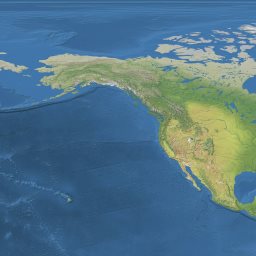
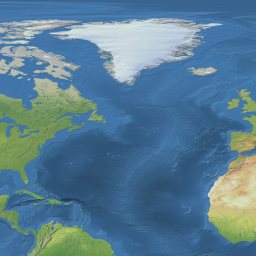
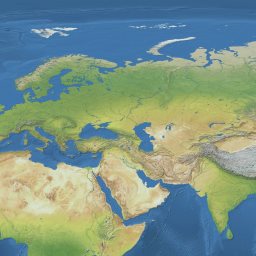
Every dot is a place Hans Kelsen is documented in, on a dated record. The interactive globe carries the full detail.
Where Hans Kelsen was documented, and when
1884year
Viennaattested“The family moved to Vienna in 1884, when Hans was three years old.”source: Wikipedia: Hans Kelsen
1908year
Viennaattested“In 1908, studying for his habilitation, Kelsen won a research scholarship which allowed him to attend the University of Heidelberg for three consecutive semesters, where he studied with the distinguished jurist Georg Jellinek before retu…”source: Wikipedia: Hans Kelsen
1910year
Heidelbergattested“After Kelsen completed his doctoral dissertation on the political philosophy of Dante, he turned to the study of Jellinek's dualist theory of law and state in Heidelberg in the years leading to 1910.”source: Wikipedia: Hans Kelsen
1919year
University of Viennaattested“In 1919, he became full professor of public and administrative law at the University of Vienna, where he established and edited the Zeitschrift für öffentliches Recht (Journal of Public Law).”source: Wikipedia: Hans Kelsen
1934year
Genevaattested“Thus, it was Kelsen to whom Morgenthau 'owed his Habilitation in Geneva,' as Kelsen's biographer Rudolf Aladár Métall confirms, and also eventually his subsequent academic career, because Kelsen produced the positive evaluation that conv…”source: Wikipedia: Hans Kelsen
1942year
United Statesattested“He moved to the United States, giving the prestigious Oliver Wendell Holmes Lectures at Harvard Law School in 1942.”source: Wikipedia: Hans Kelsen
1942year
Harvardattested“He moved to the United States, giving the prestigious Oliver Wendell Holmes Lectures at Harvard Law School in 1942.”source: Wikipedia: Hans Kelsen
1945year
University of California, Berkeleyattested“He was supported by Roscoe Pound for a faculty position at Harvard but opposed by Lon Fuller on the Harvard faculty before becoming a full professor at the department of political science at the University of California, Berkeley in 1945.”source: Wikipedia: Hans Kelsen
1945year
Harvardattested“He was supported by Roscoe Pound for a faculty position at Harvard but opposed by Lon Fuller on the Harvard faculty before becoming a full professor at the department of political science at the University of California, Berkeley in 1945.”source: Wikipedia: Hans Kelsen
25 April 1945exact date
San Franciscoattested“Shortly after the initiation of the drafting of the UN Charter on 25 April 1945 in San Francisco, Kelsen began the writing of his extended 700-page treatise on the United Nations as a newly appointed professor at the University of Califo…”source: Wikipedia: Hans Kelsen
1953year
United States Naval War Collegeattested“In 1953-54, he was visiting Professor of International Law at the United States Naval War College.”source: Wikipedia: Hans Kelsen
1953year
United Statesattested“In 1953-54, he was visiting Professor of International Law at the United States Naval War College.”source: Wikipedia: Hans Kelsen
Open Quo Fuit to see these 12 presences on the
globe, filter them by date, and follow the journey year by year.
In each of these, a source puts Hans Kelsen and the place in the same dated sentence without stating
that Hans Kelsen was there. They are kept apart from the timeline above for exactly that reason:
a mention is not a presence, and Quo Fuit does not quietly promote one into the other.
1911year
Austriamentioned“While still in Austria, Kelsen entered the debate on the versions of Public Law prevailing in his time by engaging the predominating opinions of Jellinek and Gerber in his 1911 Habilitation dissertation (see description above).”source: Wikipedia: Hans Kelsen
1920year
Federal Republic of Germanymentioned“This was first introduced in both Austria and Czechoslovakia in 1920, and later in the Federal Republic of Germany, Italy, Spain, Portugal, as well as in many countries of Central and Eastern Europe.”source: Wikipedia: Hans Kelsen
1924 to 1926period
Germanymentioned“Both Heinrich Triepel in 1924 and Gerhard Anschütz in 1926 were unsuccessful in their explicit drive to instill a strong version of judicial review in Germany's Weimar Constitution.”source: Wikipedia: Hans Kelsen
1930year
University of Colognementioned“Kelsen accepted a professorship at the University of Cologne in 1930.”source: Wikipedia: Hans Kelsen
1933year
Germanymentioned“When the National Socialists came to power in Germany in 1933, he was removed from his post.”source: Wikipedia: Hans Kelsen
1934 to 1940period
Graduate Institute of International Studiesmentioned“He relocated to Geneva, Switzerland where he taught international law at the Graduate Institute of International Studies from 1934 to 1940.”source: Wikipedia: Hans Kelsen
1934year
University of California, Berkeleymentioned“Kelsen's main statement of his theory, his book , was published in two editions, far apart: in 1934, while he was in exile in Geneva, and a second, much expanded edition after he had formally retired from the University of California, Be…”source: Wikipedia: Hans Kelsen
1936 to 1940period
Praguementioned“In 1936–1938 he was briefly professor at the German University in Prague before returning to Geneva where he remained until 1940.”source: Wikipedia: Hans Kelsen
1936 to 1940period
Genevamentioned“In 1936–1938 he was briefly professor at the German University in Prague before returning to Geneva where he remained until 1940.”source: Wikipedia: Hans Kelsen
1936 to 1940period
Karl-Ferdinands-Universitätmentioned“In 1936–1938 he was briefly professor at the German University in Prague before returning to Geneva where he remained until 1940.”source: Wikipedia: Hans Kelsen
1940year
Lisbonmentioned“In 1940, at the age of 58, he and his family fled Europe on the last voyage of the SS Washington, embarking on 1 June in Lisbon.”source: Wikipedia: Hans Kelsen
1947year
Nuremberg trialsmentioned“For Kelsen, the trials were the culmination of approximately fifteen years of research he had devoted to this topic, which started still in his European years, and which he followed with his celebrated essay, "Will the Judgment In the Nu…”source: Wikipedia: Hans Kelsen
Two people documented in the same place in the same year is a correlation, not a meeting.
Quo Fuit will never say they met without a source that says so.
How to read this page
Every line above is a dated fact taken from a source, with the sentence it came from and a link
back to it. Nothing is inferred, and a gap in the record is not evidence that someone was elsewhere.
A tag says how the fact is carried by its source: documented a structured,
explicitly dated record, attested a sentence that states the person was there,
mentioned a sentence that ties the person to the place without stating presence.
Sentences quoted from Wikipedia are available under CC BY-SA 4.0. Public domain books come from
Project Gutenberg. Quo Fuit claims no rights over these sources.
See Hans Kelsen on a 3D globe, filter the record by date, and cross this life with another to find
where the two overlap.