Quo Fuit places 3 dated presences for Günther Lütjens across 3 places, from 1889 to 1930.
Each one keeps the sentence it was taken from and a link to its source.
Johann Günther Lütjens (25 May 1889 – 27 May 1941) was a German admiral whose military service spanned more than 30 years and two world wars.Wikipedia, full article · CC BY-SA
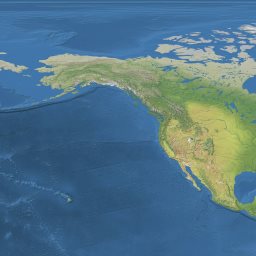
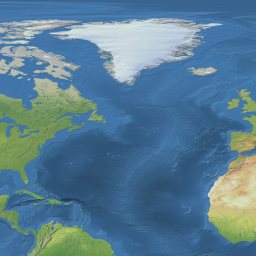
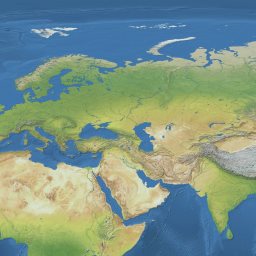
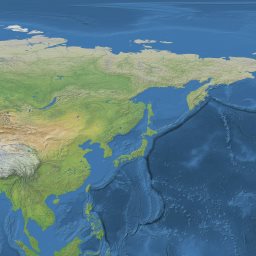
Every dot is a place Günther Lütjens is documented in, on a dated record. The interactive globe carries the full detail.
Where Günther Lütjens was documented, and when
25 May 1889exact date
Wiesbadenattested“Lütjens was born in Wiesbaden in Hesse-Nassau, a province of the Kingdom of Prussia, on 25 May 1889.”source: Wikipedia: Günther Lütjens
31 August 1930exact date
Swinemündeattested“A year later, on 31 August 1930, their first son, Gerhard, was born in Swinemünde and their second son, born in Berlin on 28 August 1931, was named Günther after his father.”source: Wikipedia: Günther Lütjens
31 August 1930exact date
Berlinattested“A year later, on 31 August 1930, their first son, Gerhard, was born in Swinemünde and their second son, born in Berlin on 28 August 1931, was named Günther after his father.”source: Wikipedia: Günther Lütjens
Open Quo Fuit to see these 3 presences on the
globe, filter them by date, and follow the journey year by year.
Other places tied to Günther Lütjens in the record
In each of these, a source puts Günther Lütjens and the place in the same dated sentence without stating
that Günther Lütjens was there. They are kept apart from the timeline above for exactly that reason:
a mention is not a presence, and Quo Fuit does not quietly promote one into the other.
3 April 1907exact date
Kielmentioned“He entered the Imperial German Navy (Kaiserliche Marine) as a Seekadett (Cadett) on 3 April 1907 at the German Imperial Naval Academy in Kiel, where he received his initial infantry training.”source: Wikipedia: Günther Lütjens
1 April 1909exact date
Kielmentioned“Starting on 1 April 1909, he underwent naval artillery training at the Naval Artillery School in Kiel-Wik and then participated in a torpedo course on board on 1 July 1909.”source: Wikipedia: Günther Lütjens
24 May 1917exact date
Kapitmentioned“On 24 May 1917, Lütjens was promoted to Kapitänleutnant (captain lieutenant) during this assignment.”source: Wikipedia: Günther Lütjens
11 November 1918exact date
Antwerpmentioned“He held this position until the end of World War I on 11 November 1918, when he returned to Antwerp and Kiel.”source: Wikipedia: Günther Lütjens
10 March 1919exact date
Lübeckmentioned“He was ordered to the German Imperial Naval Office on 10 March 1919 and started serving with the Sea Transportation Agency in Lübeck on 8 July 1919.”source: Wikipedia: Günther Lütjens
10 March 1919exact date
German Imperial Naval Officementioned“He was ordered to the German Imperial Naval Office on 10 March 1919 and started serving with the Sea Transportation Agency in Lübeck on 8 July 1919.”source: Wikipedia: Günther Lütjens
3 October 1929exact date
Swinemündementioned“On 3 October 1929 Lütjens took command as head of the 1st Torpedo-Boat-Flotilla in Swinemünde (present-day Świnoujście) which he commanded until 17 September 1931.”source: Wikipedia: Günther Lütjens
1 July 1933exact date
Kapitmentioned“He advanced in rank to Kapitän zur See (Captain) on 1 July 1933.”source: Wikipedia: Günther Lütjens
Callaomentioned“At Callao (25 January – 6 February 1935) they joined in the 400-year celebration of Peru.”source: Wikipedia: Günther Lütjens
June 1935month
Vigomentioned“Lütjens first met Karl Dönitz, future Commander-in-Chief of the Kriegsmarine in Vigo in June 1935.”source: Wikipedia: Günther Lütjens
15 June 1935exact date
Kielmentioned“Karlsruhe returned to Kiel on 15 June 1935, travelling through the Panama Canal to Houston, Charlestown and Vigo, Spain.”source: Wikipedia: Günther Lütjens
15 June 1935exact date
Houstonmentioned“Karlsruhe returned to Kiel on 15 June 1935, travelling through the Panama Canal to Houston, Charlestown and Vigo, Spain.”source: Wikipedia: Günther Lütjens
1 September 1939exact date
Gdyniamentioned“On 1 September 1939 Germany invaded Poland and two days later, Lütjens sailing aboard his flagship, Z1 Leberecht Maass and Z9 Wolfgang Zenker took part in an attack on the Polish ships and in Gdynia harbour.”source: Wikipedia: Günther Lütjens
Two people documented in the same place in the same year is a correlation, not a meeting.
Quo Fuit will never say they met without a source that says so.
How to read this page
Every line above is a dated fact taken from a source, with the sentence it came from and a link
back to it. Nothing is inferred, and a gap in the record is not evidence that someone was elsewhere.
A tag says how the fact is carried by its source: documented a structured,
explicitly dated record, attested a sentence that states the person was there,
mentioned a sentence that ties the person to the place without stating presence.
Sentences quoted from Wikipedia are available under CC BY-SA 4.0. Public domain books come from
Project Gutenberg. Quo Fuit claims no rights over these sources.
See Günther Lütjens on a 3D globe, filter the record by date, and cross this life with another to find
where the two overlap.