Quo Fuit places 3 dated presences for Guarino Guarini across 3 places, from 1624 to 1683.
Each one keeps the sentence it was taken from and a link to its source.
Camillo Guarino Guarini (17 January 1624 to 6 March 1683) was an Italian architect of the Piedmontese Baroque, active in Turin as well as Sicily, France and Portugal.Wikipedia, full article · CC BY-SA
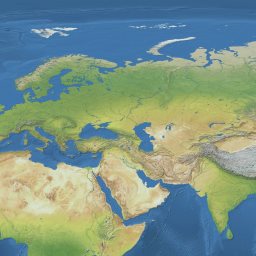
Every dot is a place Guarino Guarini is documented in, on a dated record. The interactive globe carries the full detail.
Where Guarino Guarini was documented, and when
17 January 1624exact date
Modenaattested“Camillo Guarino Guarini was born in Modena on 17 January 1624.”source: Wikipedia: Guarino Guarini
19 May 1668exact date
San Lorenzo, Turinattested“The design skills evinced by Guarini at San Lorenzo prompted Charles-Emanuel, to appoint him, by a patent dated 19 May 1668, engineer for the chapel of the Holy Shroud, Turin.”source: Wikipedia: Guarino Guarini
Other places tied to Guarino Guarini in the record
In each of these, a source puts Guarino Guarini and the place in the same dated sentence without stating
that Guarino Guarini was there. They are kept apart from the timeline above for exactly that reason:
a mention is not a presence, and Quo Fuit does not quietly promote one into the other.
1639year
Romementioned“At the age of 15 he became a novice and was sent at the monastery of San Silvestro al Quirinale in Rome (1639–48), where he was able to study High Baroque architecture, in particular the work of Borromini, Gian Lorenzo Bernini and Pietro…”source: Wikipedia: Guarino Guarini
1648year
Modenamentioned“In 1648 he returned to Modena as an ordained priest and two years later was appointed lecturer in philosophy at the Theatine College there.”source: Wikipedia: Guarino Guarini
1655year
Modenamentioned“In 1655 he was elected Provost (preposito) of the Theatine house in Modena against the wishes of Alfonso IV d'Este, who was acting as Viceroy for his father, Francesco I d'Este, Duke of Modena: he forbade the appointment and banished Gua…”source: Wikipedia: Guarino Guarini
1656 to 1660period
Parmamentioned“After short sojourns in Parma and Guastalla (1656), Guarini’s movements are unknown until his arrival in Messina in 1660.”source: Wikipedia: Guarino Guarini
1656 to 1660period
Messinamentioned“After short sojourns in Parma and Guastalla (1656), Guarini’s movements are unknown until his arrival in Messina in 1660.”source: Wikipedia: Guarino Guarini
June 1662month
Modenamentioned“In June 1662, Guarini received word that his mother was gravely ill and swiftly departed from Sicily to Modena to stay with her at the end of her life.”source: Wikipedia: Guarino Guarini
June 1662month
Sicilymentioned“In June 1662, Guarini received word that his mother was gravely ill and swiftly departed from Sicily to Modena to stay with her at the end of her life.”source: Wikipedia: Guarino Guarini
November 1662month
Parismentioned“In November 1662 Guarini travelled to Paris at the invitation of his Order to design the church of Ste Anne-la-Royale.”source: Wikipedia: Guarino Guarini
1664year
Parismentioned“This type of curved inflection was an innovation in Italian Baroque palace design, although Bernini had featured an oval pavilion connected to side bays in his first project for the east front of the Louvre (1664), which Guarini may have…”source: Wikipedia: Guarino Guarini
1665year
Parismentioned“In 1665, he published in Paris his Placita Philosophica (A System of Philosophy), a large mathematical-philosophical treatise divided into eight parts.”source: Wikipedia: Guarino Guarini
1666year
Turinmentioned“When Guarini arrived in Turin towards the end of 1666 he submitted a completely new design for San Lorenzo, the first stone of which had been laid in 1634.”source: Wikipedia: Guarino Guarini
1679year
Palazzo Carignanomentioned“Guarini’s other major secular building in Turin, the Collegio dei Nobili (begun 1679; now the Palazzo dell’Accademia delle Scienze), is very different in character from the Palazzo Carignano.”source: Wikipedia: Guarino Guarini
1679year
Turinmentioned“Guarini’s other major secular building in Turin, the Collegio dei Nobili (begun 1679; now the Palazzo dell’Accademia delle Scienze), is very different in character from the Palazzo Carignano.”source: Wikipedia: Guarino Guarini
How to read this page
Every line above is a dated fact taken from a source, with the sentence it came from and a link
back to it. Nothing is inferred, and a gap in the record is not evidence that someone was elsewhere.
A tag says how the fact is carried by its source: documented a structured,
explicitly dated record, attested a sentence that states the person was there,
mentioned a sentence that ties the person to the place without stating presence.
Sentences quoted from Wikipedia are available under CC BY-SA 4.0. Public domain books come from
Project Gutenberg. Quo Fuit claims no rights over these sources.
See Guarino Guarini on a 3D globe, filter the record by date, and cross this life with another to find
where the two overlap.