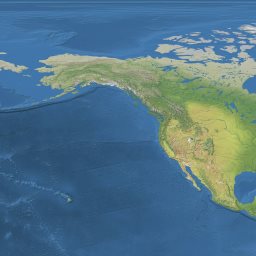
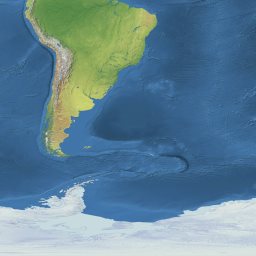
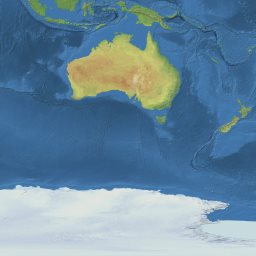
Quo Fuit places 5 dated presences for Gordon Banks across 5 places, from 1937 to 2019.
Each one keeps the sentence it was taken from and a link to its source.
Gordon Banks (30 December 1937 – 12 February 2019) was an English professional footballer who played as a goalkeeper.Wikipedia, full article · CC BY-SA
Every dot is a place Gordon Banks is documented in, on a dated record. The interactive globe carries the full detail.
Where Gordon Banks was documented, and when
30 December 1937exact date
Abbeydale, Sheffieldattested“Banks was born in Abbeydale, Sheffield, on 30 December 1937, and brought up in the working-class area of Tinsley.”source: Wikipedia: Gordon Banks
1964year
Brazilattested“Blackpool's Tony Waiters won five caps in the England goal in 1964 but found that his challenge to Banks's first-team place came to an end after he conceded five goals to Brazil.”source: Wikipedia: Gordon Banks
1964year
Englandattested“Blackpool's Tony Waiters won five caps in the England goal in 1964 but found that his challenge to Banks's first-team place came to an end after he conceded five goals to Brazil.”source: Wikipedia: Gordon Banks
1968year
Clevelandattested“Banks also played a season for the Cleveland Stokers of the American United Soccer Association in the summer of 1968: he played seven of the short-lived club's 12 games in Cleveland, Ohio.”source: Wikipedia: Gordon Banks
12 February 2019exact date
Madeley, Staffordshireattested“He died from cancer in his sleep at his home in Madeley, Staffordshire, 12 February 2019 at the age of 81.”source: Wikipedia: Gordon Banks
Open Quo Fuit to see these 5 presences on the
globe, filter them by date, and follow the journey year by year.
In each of these, a source puts Gordon Banks and the place in the same dated sentence without stating
that Gordon Banks was there. They are kept apart from the timeline above for exactly that reason:
a mention is not a presence, and Quo Fuit does not quietly promote one into the other.
1955year
Germanymentioned“Banks first met his wife, Ursula, during his national service in Germany in 1955.”source: Wikipedia: Gordon Banks
November 1958month
Saltergatementioned“Banks was given his first-team debut by manager Doug Livingstone, at the expense of long-serving Ron Powell, in a Third Division game against Colchester United at Saltergate in November 1958.”source: Wikipedia: Gordon Banks
July 1959month
Chesterfieldmentioned“Having just 23 league and three cup appearances to his name, it came as a surprise to Banks when Matt Gillies, manager of First Division club Leicester City, bought him from Chesterfield for £7,000 in July 1959; this also meant a wage in…”source: Wikipedia: Gordon Banks
1960year
White Hart Lanementioned“Leicester finished sixth in 1960–61, and managed to beat champions Tottenham Hotspur at White Hart Lane.”source: Wikipedia: Gordon Banks
1962year
Chilementioned“Still, after the 1962 World Cup in Chile, a new coach was appointed in former England right-back Alf Ramsey.”source: Wikipedia: Gordon Banks
6 April 1963exact date
Wembleymentioned“Banks won his first cap on 6 April 1963 against Scotland at Wembley, after Springett was dropped following a poor performance.”source: Wikipedia: Gordon Banks
1964year
Argentinamentioned“Banks also played in two of England's three games at the "Little World Cup" in Brazil in the summer of 1964, a 1–1 draw with Portugal and a 1–0 defeat to Argentina.”source: Wikipedia: Gordon Banks
1966year
Victoria Groundmentioned“He replaced John Farmer as the club's number one, and kept goal in the last four games of the 1966–67 season, making his home debut at the Victoria Ground in a 3–1 win over his former club Leicester.”source: Wikipedia: Gordon Banks
1966year
Hampden Parkmentioned“They then played seven friendlies in 1966 in the build-up to the World Cup, though the team passed their biggest test of character in the British Home Championship, beating Scotland 4–3 in front of a crowd of over 130,000 at Hampden Park.”source: Wikipedia: Gordon Banks
15 April 1967exact date
Wembleymentioned“Scotland were the first team to beat the world champions, as goals from Denis Law, Bobby Lennox and Jim McCalliog secured a 3–2 victory at Wembley on 15 April 1967.”source: Wikipedia: Gordon Banks
1 March 1969exact date
Roker Parkmentioned“However, on 1 March 1969, he was knocked unconscious at Roker Park by Sunderland's Malcolm Moore, and his replacement David Herd conceded four goals in a 4–1 defeat.”source: Wikipedia: Gordon Banks
1972year
UEFAmentioned“Only four teams competed in UEFA Euro 1972: Belgium (hosts), Hungary, the Soviet Union, and West Germany.”source: Wikipedia: Gordon Banks
27 May 1972exact date
Hampden Parkmentioned“Banks played his 73rd and final game for England on 27 May 1972, in a 1–0 win over Scotland at Hampden Park.”source: Wikipedia: Gordon Banks
October 1972month
Madeley Heathmentioned“In October 1972, Banks was involved in a car crash in his Ford Consul while driving on the wrong side of the road, close to his home in Madeley Heath.”source: Wikipedia: Gordon Banks
Two people documented in the same place in the same year is a correlation, not a meeting.
Quo Fuit will never say they met without a source that says so.
How to read this page
Every line above is a dated fact taken from a source, with the sentence it came from and a link
back to it. Nothing is inferred, and a gap in the record is not evidence that someone was elsewhere.
A tag says how the fact is carried by its source: documented a structured,
explicitly dated record, attested a sentence that states the person was there,
mentioned a sentence that ties the person to the place without stating presence.
Sentences quoted from Wikipedia are available under CC BY-SA 4.0. Public domain books come from
Project Gutenberg. Quo Fuit claims no rights over these sources.
See Gordon Banks on a 3D globe, filter the record by date, and cross this life with another to find
where the two overlap.