Quo Fuit places 6 dated presences for Giovanni Segantini across 5 places, from 1864 to 1899.
Each one keeps the sentence it was taken from and a link to its source.
Giovanni Segantini (15 January 1858 – 28 September 1899) was an Austrian then stateless painter known for his large pastoral landscapes of the Alps.Wikipedia, full article · CC BY-SA
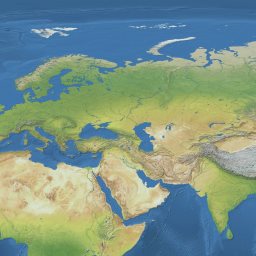
Every dot is a place Giovanni Segantini is documented in, on a dated record. The interactive globe carries the full detail.
Where Giovanni Segantini was documented, and when
1864year
Trentinoattested“Except for a six-month period in 1864 when Agostino returned to Trentino, Segantini spent his early years with his mother, who experienced severe depression due to the death of Lodovico.”source: Wikipedia: Giovanni Segantini
1873year
Trentinoattested“In 1873, Segantini's half-brother Napoleon claimed him from the reformatory, and for the next year Segantini lived with Napoleon in Trentino.”source: Wikipedia: Giovanni Segantini
1886year
Savogninattested“In 1886, Segantini sought a less expensive place to live and, attracted by the beautiful mountain scenery, he moved his family to Savognin, Graubünden.”source: Wikipedia: Giovanni Segantini
1896year
Munichattested“He continued to gain fame when a whole room was devoted to his work in the Munich Secession in 1896.”source: Wikipedia: Giovanni Segantini
1899year
Brusselsattested“In 1899 an entire room is devoted to Segantini's work at the annual exhibition of the Societe des Beaux-Arts in Brussels.”source: Wikipedia: Giovanni Segantini
28 September 1899exact date
Pontresinaattested“* Alberto Segantini (1883–1904) * Mario Segantini (1885–1916), * Bianca Segantini (1886–1980), an author Segantini died on 28 September 1899 in Pontresina, Switzerland aged 41.”source: Wikipedia: Giovanni Segantini
Open Quo Fuit to see these 6 presences on the
globe, filter them by date, and follow the journey year by year.
Other places tied to Giovanni Segantini in the record
In each of these, a source puts Giovanni Segantini and the place in the same dated sentence without stating
that Giovanni Segantini was there. They are kept apart from the timeline above for exactly that reason:
a mention is not a presence, and Quo Fuit does not quietly promote one into the other.
1865year
Milanmentioned“Irene hoped to better her life by moving to Milan, and in late 1865 she submitted an application to relinquish Austrian citizenship for both her brother and her.”source: Wikipedia: Giovanni Segantini
1880year
Pusianomentioned“Once he wrote, "Take these unsightly flowers, these violets, as a symbol of my great love, When a spring comes in which I fail to send you such violets, you will no longer find me among the living." In 1880, he and Bice moved to Pusiano…”source: Wikipedia: Giovanni Segantini
1883year
Internationale Koloniale en Uitvoerhandel Tentoonstellingmentioned“Moritz), which took a gold medal at the 1883 World's Fair in Amsterdam.”source: Wikipedia: Giovanni Segantini
1883year
Amsterdammentioned“Moritz), which took a gold medal at the 1883 World's Fair in Amsterdam.”source: Wikipedia: Giovanni Segantini
1890year
Brusselsmentioned“At the 1890 Salon des XX in Brussels, Segantini was given an entire exhibition room, an honor awarded such greats as Cézanne, Gauguin and Van Gogh.”source: Wikipedia: Giovanni Segantini
1894year
Milanmentioned“Segantini continued to gain recognition in Italy, and in 1894 the Castello Sforzesco in Milan put on a retrospective of ninety of his works.”source: Wikipedia: Giovanni Segantini
1894year
Italymentioned“Segantini continued to gain recognition in Italy, and in 1894 the Castello Sforzesco in Milan put on a retrospective of ninety of his works.”source: Wikipedia: Giovanni Segantini
Two people documented in the same place in the same year is a correlation, not a meeting.
Quo Fuit will never say they met without a source that says so.
How to read this page
Every line above is a dated fact taken from a source, with the sentence it came from and a link
back to it. Nothing is inferred, and a gap in the record is not evidence that someone was elsewhere.
A tag says how the fact is carried by its source: documented a structured,
explicitly dated record, attested a sentence that states the person was there,
mentioned a sentence that ties the person to the place without stating presence.
Sentences quoted from Wikipedia are available under CC BY-SA 4.0. Public domain books come from
Project Gutenberg. Quo Fuit claims no rights over these sources.
See Giovanni Segantini on a 3D globe, filter the record by date, and cross this life with another to find
where the two overlap.