Quo Fuit places 13 dated presences for Gioachino Rossini across 10 places, from 1792 to 1868.
Each one keeps the sentence it was taken from and a link to its source.
Gioachino Antonio Rossini (29 February 1792 – 13 November 1868) was an Italian composer and conductor of the late Classical and early Romantic eras.Wikipedia, full article · CC BY-SA
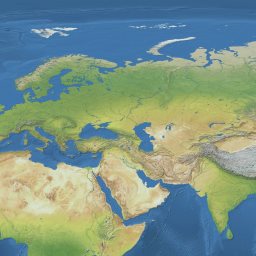
Every dot is a place Gioachino Rossini is documented in, on a dated record. The interactive globe carries the full detail.
Where Gioachino Rossini was documented, and when
1792year
Pesaroattested“Rossini was born on 29 February in 1792 in Pesaro, a town on the Adriatic coast of Italy that was then part of the Papal States.”source: Wikipedia: Gioachino Rossini
1802year
Lugo, Emilia-Romagnaattested“In 1802 the family moved to Lugo, near Ravenna, where Rossini received a good basic education in Italian, Latin and arithmetic as well as music.”source: Wikipedia: Gioachino Rossini
1802year
Ravennaattested“In 1802 the family moved to Lugo, near Ravenna, where Rossini received a good basic education in Italian, Latin and arithmetic as well as music.”source: Wikipedia: Gioachino Rossini
1807year
Bolognaattested“Rossini had heard her sing in Bologna in 1807, and when he moved to Naples he wrote a succession of important roles for her in opere serie.”source: Wikipedia: Gioachino Rossini
1807year
Naplesattested“Rossini had heard her sing in Bologna in 1807, and when he moved to Naples he wrote a succession of important roles for her in opere serie.”source: Wikipedia: Gioachino Rossini
1816 to 1825period
Naplesattested“Others came to Italy to study the revival of Italian opera and used its lessons to advance themselves; amongst these was the Berlin-born Giacomo Meyerbeer who arrived in Italy in 1816, a year after Rossini's establishment at Naples, and…”source: Wikipedia: Gioachino Rossini
1816 to 1825period
Italyattested“Others came to Italy to study the revival of Italian opera and used its lessons to advance themselves; amongst these was the Berlin-born Giacomo Meyerbeer who arrived in Italy in 1816, a year after Rossini's establishment at Naples, and…”source: Wikipedia: Gioachino Rossini
1816 to 1825period
Parisattested“Others came to Italy to study the revival of Italian opera and used its lessons to advance themselves; amongst these was the Berlin-born Giacomo Meyerbeer who arrived in Italy in 1816, a year after Rossini's establishment at Naples, and…”source: Wikipedia: Gioachino Rossini
1816 to 1825period
Turinattested“Others came to Italy to study the revival of Italian opera and used its lessons to advance themselves; amongst these was the Berlin-born Giacomo Meyerbeer who arrived in Italy in 1816, a year after Rossini's establishment at Naples, and…”source: Wikipedia: Gioachino Rossini
September 1824month
Parisattested“Rossini's new, and highly remunerative, contract with the French government was negotiated under Louis XVIII, who died in September 1824, soon after Rossini's arrival in Paris.”source: Wikipedia: Gioachino Rossini
1835 to 1839period
Castenasoattested“But although Othello could at least claim to be genuine, canonic Rossini, the historian Mark Everist notes that detractors argued that Robert was simply "fake goods, and from a bygone era at that"; he cites Théophile Gautier regretting t…”source: Wikipedia: Gioachino Rossini
1848 to 1855period
Bolognaattested“The events of the Year of Revolution in 1848 led Rossini to move away from the Bologna area, where he felt threatened by insurrection, and to make Florence his base, which it remained until 1855.”source: Wikipedia: Gioachino Rossini
13 November 1868exact date
Passyattested“After a short illness, and an unsuccessful operation to treat colorectal cancer, Rossini died at Passy on 13 November 1868 at the age of seventy-six.”source: Wikipedia: Gioachino Rossini
Open Quo Fuit to see these 13 presences on the
globe, filter them by date, and follow the journey year by year.
Other places tied to Gioachino Rossini in the record
In each of these, a source puts Gioachino Rossini and the place in the same dated sentence without stating
that Gioachino Rossini was there. They are kept apart from the timeline above for exactly that reason:
a mention is not a presence, and Quo Fuit does not quietly promote one into the other.
1812year
La Scalamentioned“In mid-1812 he received a commission from La Scala, Milan, where his two-act comedy La pietra del paragone ran for fifty-three performances, a considerable run for the time, which brought him not only financial benefits, but exemption fr…”source: Wikipedia: Gioachino Rossini
1812year
Venicementioned“The Teatro San Moisè in Venice, where his farse was first performed, and the La Scala Theatre of Milan which premiered his two-act opera La pietra del paragone (1812), were seeking works in that tradition; Gossett notes that in these ope…”source: Wikipedia: Gioachino Rossini
1813 to 1814period
Milanmentioned“From the end of 1813 to mid-1814 he was in Milan creating two new operas for La Scala, Aureliano in Palmira and Il Turco in Italia.”source: Wikipedia: Gioachino Rossini
1813 to 1814period
Italiamentioned“From the end of 1813 to mid-1814 he was in Milan creating two new operas for La Scala, Aureliano in Palmira and Il Turco in Italia.”source: Wikipedia: Gioachino Rossini
6 February 1813exact date
Venicementioned“The great success in Venice of the premieres of both Tancredi and the comic opera L'italiana in Algeri within a few weeks of each other (6 February 1813 and 22 May 1813 respectively) set the seal on Rossini's reputation as the rising ope…”source: Wikipedia: Gioachino Rossini
May 1813month
Algerimentioned“Within weeks of Tancredi, Rossini had another box-office success with his comedy L'italiana in Algeri, composed in great haste and premiered in May 1813.”source: Wikipedia: Gioachino Rossini
1814year
Italiamentioned“1814 was a less remarkable year for the rising composer, neither Il turco in Italia or Sigismondo pleasing the Milanese or Venetian public, respectively.”source: Wikipedia: Gioachino Rossini
1815year
Pesaromentioned“The city, which was the cradle of the operas of Cimarosa and Paisiello, had been slow to acknowledge the composer from Pesaro, but Domenico Barbaia invited him in 1815 on a seven-year contract to manage his theatres and compose operas.”source: Wikipedia: Gioachino Rossini
1816year
Romementioned“In 1816, for the Teatro Argentina in Rome, he composed the opera that was to become his best-known: Il barbiere di Siviglia (The Barber of Seville).”source: Wikipedia: Gioachino Rossini
1817 to 1830period
Parismentioned“In 1817 came the first performance of one of his operas (L'Italiana) at the Theâtre-Italien in Paris; its success led to others of his operas being staged there, and eventually to his contract in Paris from 1824 to 1830.”source: Wikipedia: Gioachino Rossini
1817year
Venicementioned“Spike Hughes notes that of the twenty-six numbers of Eduardo e Cristina, produced in Venice in 1817, nineteen were lifted from previous works.”source: Wikipedia: Gioachino Rossini
1818 to 1819period
Egyptmentioned“Among his other works for the house were Mosè in Egitto, based on the biblical story of Moses and the Exodus from Egypt (1818), and La donna del lago, from Sir Walter Scott's poem The Lady of the Lake (1819).”source: Wikipedia: Gioachino Rossini
1818year
Venicementioned“Amongst the most notable of these, all containing virtuoso singing roles, were Mosè in Egitto (1818), La donna del lago (1819), Maometto II (1820) all staged in Naples, and Semiramide, his last opera written for Italy, staged at La Fenic…”source: Wikipedia: Gioachino Rossini
1818year
La Fenicementioned“Amongst the most notable of these, all containing virtuoso singing roles, were Mosè in Egitto (1818), La donna del lago (1819), Maometto II (1820) all staged in Naples, and Semiramide, his last opera written for Italy, staged at La Fenic…”source: Wikipedia: Gioachino Rossini
Two people documented in the same place in the same year is a correlation, not a meeting.
Quo Fuit will never say they met without a source that says so.
How to read this page
Every line above is a dated fact taken from a source, with the sentence it came from and a link
back to it. Nothing is inferred, and a gap in the record is not evidence that someone was elsewhere.
A tag says how the fact is carried by its source: documented a structured,
explicitly dated record, attested a sentence that states the person was there,
mentioned a sentence that ties the person to the place without stating presence.
Sentences quoted from Wikipedia are available under CC BY-SA 4.0. Public domain books come from
Project Gutenberg. Quo Fuit claims no rights over these sources.
See Gioachino Rossini on a 3D globe, filter the record by date, and cross this life with another to find
where the two overlap.