Quo Fuit places 3 dated presences for G. H. Hardy across 3 places, from 1877 to 1928.
Each one keeps the sentence it was taken from and a link to its source.
Godfrey Harold Hardy (7 February 1877 – 1 December 1947) was an English mathematician, known for his achievements in number theory and mathematical analysis.Wikipedia, full article · CC BY-SA
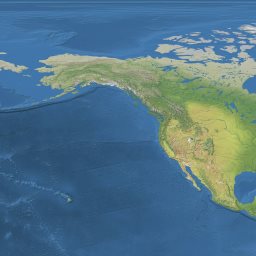
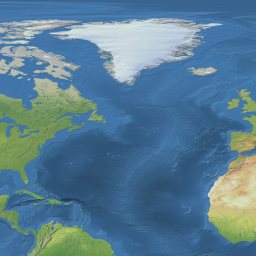
Every dot is a place G. H. Hardy is documented in, on a dated record. The interactive globe carries the full detail.
Where G. H. Hardy was documented, and when
7 February 1877exact date
Cranleighattested“Hardy was born on 7 February 1877, in Cranleigh, Surrey, England, into a teaching family.”source: Wikipedia: G. H. Hardy
1928 to 1929period
Oxford Universityattested“Hardy spent the academic year 1928–1929 at Princeton University in an academic exchange with Oswald Veblen, who spent the year at Oxford.”source: Wikipedia: G. H. Hardy
1928 to 1929period
Princeton Universityattested“Hardy spent the academic year 1928–1929 at Princeton University in an academic exchange with Oswald Veblen, who spent the year at Oxford.”source: Wikipedia: G. H. Hardy
Open Quo Fuit to see these 3 presences on the
globe, filter them by date, and follow the journey year by year.
In each of these, a source puts G. H. Hardy and the place in the same dated sentence without stating
that G. H. Hardy was there. They are kept apart from the timeline above for exactly that reason:
a mention is not a presence, and Quo Fuit does not quietly promote one into the other.
1896year
Trinity College, Cambridgementioned“In 1896, he entered Trinity College, Cambridge.”source: Wikipedia: G. H. Hardy
1919year
Cambridgementioned“In the aftermath of the Bertrand Russell affair during World War I, in 1919 he left Cambridge to take the Savilian Chair of Geometry (and thus become a Fellow of New College) at Oxford.”source: Wikipedia: G. H. Hardy
1919year
Oxford Universitymentioned“In the aftermath of the Bertrand Russell affair during World War I, in 1919 he left Cambridge to take the Savilian Chair of Geometry (and thus become a Fellow of New College) at Oxford.”source: Wikipedia: G. H. Hardy
1931 to 1942period
Cambridgementioned“Hardy left Oxford and returned to Cambridge in 1931, becoming again a fellow of Trinity College and holding the Sadleirian Professorship until 1942.”source: Wikipedia: G. H. Hardy
1931 to 1942period
Oxford Universitymentioned“Hardy left Oxford and returned to Cambridge in 1931, becoming again a fellow of Trinity College and holding the Sadleirian Professorship until 1942.”source: Wikipedia: G. H. Hardy
Two people documented in the same place in the same year is a correlation, not a meeting.
Quo Fuit will never say they met without a source that says so.
How to read this page
Every line above is a dated fact taken from a source, with the sentence it came from and a link
back to it. Nothing is inferred, and a gap in the record is not evidence that someone was elsewhere.
A tag says how the fact is carried by its source: documented a structured,
explicitly dated record, attested a sentence that states the person was there,
mentioned a sentence that ties the person to the place without stating presence.
Sentences quoted from Wikipedia are available under CC BY-SA 4.0. Public domain books come from
Project Gutenberg. Quo Fuit claims no rights over these sources.
See G. H. Hardy on a 3D globe, filter the record by date, and cross this life with another to find
where the two overlap.