Quo Fuit places 6 dated presences for Francis William Aston across 6 places, from 1877 to 1945.
Each one keeps the sentence it was taken from and a link to its source.
Francis William Aston FRS (1 September 1877 – 20 November 1945) was a British chemist and physicist who won the 1922 Nobel Prize in Chemistry for his discovery, by means of his mass spectrograph, of isotopes in many non-radioactive elements and for his enunciation of the whole number rule.Wikipedia, full article · CC BY-SA
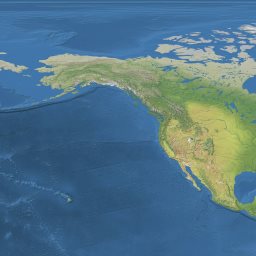
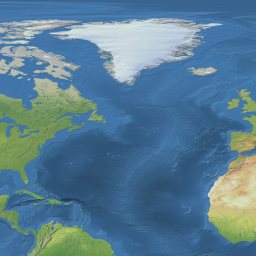
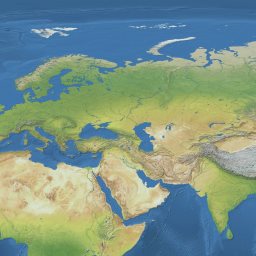
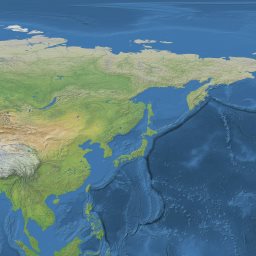
Every dot is a place Francis William Aston is documented in, on a dated record. The interactive globe carries the full detail.
Where Francis William Aston was documented, and when
1 September 1877exact date
Harborneattested“Francis Aston was born in Harborne, now part of Birmingham, on 1 September 1877.”source: Wikipedia: Francis William Aston
1893year
Mason Collegeattested“In 1893 Francis William Aston began his university studies at Mason College (which was then external college of University of London) where he was taught physics by John Henry Poynting and chemistry by Frankland and Tilden.”source: Wikipedia: Francis William Aston
1908 to 1939period
Australiaattested“He visited many places around the globe on extensive travel tours starting from 1908 with a trip to Australia and New Zealand which he visited again in 1938–1939.”source: Wikipedia: Francis William Aston
31 August 1932exact date
Canadaattested“He joined several expeditions to study solar eclipses in Benkoeben in 1925, Sumatra in 1932, Magog in Canada on 31 August 1932 and Kamishari Hokkaido, Japan on June19th 1936.”source: Wikipedia: Francis William Aston
1940 to 1945period
South Africaattested“He also planned to attend expeditions to South Africa in 1940 and Brazil in 1945 in later life.”source: Wikipedia: Francis William Aston
Other places tied to Francis William Aston in the record
In each of these, a source puts Francis William Aston and the place in the same dated sentence without stating
that Francis William Aston was there. They are kept apart from the timeline above for exactly that reason:
a mention is not a presence, and Quo Fuit does not quietly promote one into the other.
1902year
Irelandmentioned“With the invention of motorised vehicles he constructed a combustion engine of his own in 1902 and participated in the Gordon Bennett auto race in Ireland in 1903.”source: Wikipedia: Francis William Aston
1903year
University of Birminghammentioned“This period of employment ended in 1903 when he returned to the University of Birmingham under Poynting as an Associate.”source: Wikipedia: Francis William Aston
1908 to 1909period
Cambridgementioned“After the death of his father, and a trip around the world in 1908, he was appointed lecturer at the University of Birmingham in 1909 but moved to the Cavendish Laboratory in Cambridge on the invitation of J.”source: Wikipedia: Francis William Aston
1908 to 1909period
University of Birminghammentioned“After the death of his father, and a trip around the world in 1908, he was appointed lecturer at the University of Birmingham in 1909 but moved to the Cavendish Laboratory in Cambridge on the invitation of J.”source: Wikipedia: Francis William Aston
1908 to 1909period
Cavendish Laboratorymentioned“After the death of his father, and a trip around the world in 1908, he was appointed lecturer at the University of Birmingham in 1909 but moved to the Cavendish Laboratory in Cambridge on the invitation of J.”source: Wikipedia: Francis William Aston
1909year
Cambridgementioned“Not content with these sports he also engaged in swimming, golf, especially with Rutherford and other colleagues in Cambridge, tennis, winning some prizes at open tournaments in England, Wales and Ireland and learning surfing in Honolulu…”source: Wikipedia: Francis William Aston
1909year
Honolulumentioned“Not content with these sports he also engaged in swimming, golf, especially with Rutherford and other colleagues in Cambridge, tennis, winning some prizes at open tournaments in England, Wales and Ireland and learning surfing in Honolulu…”source: Wikipedia: Francis William Aston
1909year
Englandmentioned“Not content with these sports he also engaged in swimming, golf, especially with Rutherford and other colleagues in Cambridge, tennis, winning some prizes at open tournaments in England, Wales and Ireland and learning surfing in Honolulu…”source: Wikipedia: Francis William Aston
1919year
Cambridgementioned“After the war, he returned to research at the Cavendish Laboratory in Cambridge and completed building his first mass spectrograph that he reported on in 1919.”source: Wikipedia: Francis William Aston
1919year
Cavendish Laboratorymentioned“After the war, he returned to research at the Cavendish Laboratory in Cambridge and completed building his first mass spectrograph that he reported on in 1919.”source: Wikipedia: Francis William Aston
Two people documented in the same place in the same year is a correlation, not a meeting.
Quo Fuit will never say they met without a source that says so.
How to read this page
Every line above is a dated fact taken from a source, with the sentence it came from and a link
back to it. Nothing is inferred, and a gap in the record is not evidence that someone was elsewhere.
A tag says how the fact is carried by its source: documented a structured,
explicitly dated record, attested a sentence that states the person was there,
mentioned a sentence that ties the person to the place without stating presence.
Sentences quoted from Wikipedia are available under CC BY-SA 4.0. Public domain books come from
Project Gutenberg. Quo Fuit claims no rights over these sources.
See Francis William Aston on a 3D globe, filter the record by date, and cross this life with another to find
where the two overlap.