Quo Fuit places 3 dated presences for Filippo Juvarra across 3 places, from 1703 to 1736.
Each one keeps the sentence it was taken from and a link to its source.
Filippo Juvarra or Juvara (7 March 1678 – 31 January 1736) was an Italian architect, scenographer, engraver and goldsmith.Wikipedia, full article · CC BY-SA
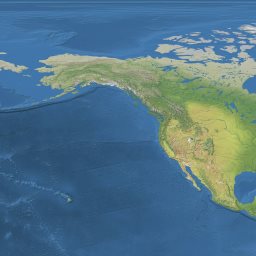
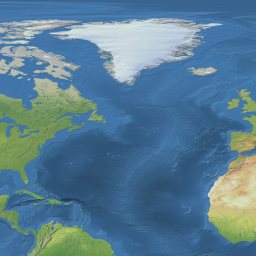
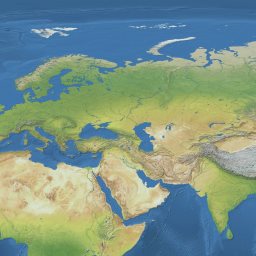
Every dot is a place Filippo Juvarra is documented in, on a dated record. The interactive globe carries the full detail.
Where Filippo Juvarra was documented, and when
1703year
Kingdom of Sicilyattested“He spent his formative years with his family in Sicily, working in the family shop, but also studied for the priesthood, to which he was ordained in 1703.”source: Wikipedia: Filippo Juvarra
Other places tied to Filippo Juvarra in the record
In each of these, a source puts Filippo Juvarra and the place in the same dated sentence without stating
that Filippo Juvarra was there. They are kept apart from the timeline above for exactly that reason:
a mention is not a presence, and Quo Fuit does not quietly promote one into the other.
1706year
Naplesmentioned“A couple of early drawings by Juvarra, dated 1706, are associated with the San Bartolomeo Theater in Naples, though whether he actually completed the set designs for the theatre is unknown.”source: Wikipedia: Filippo Juvarra
1708year
Romementioned“In 1708 he created his first important non-theatrical architectural work, and the only one realized in Rome: the small but superbly executed Antamoro Chapel in the church of San Girolamo della Carità which he conceived in intimate cooper…”source: Wikipedia: Filippo Juvarra
Turinmentioned“In 1714, Juvarra began to design the architectural works for which he is best known, when he was recruited to the Duchy of Savoy, where Victor Amadeus II first employed him in a scenographic project, then elevated Juvarra to the position…”source: Wikipedia: Filippo Juvarra
1715 to 1725period
Turinmentioned“In Turin, Juvarra designed the facade of the church of Santa Cristina (1715–1718), the church of San Filippo, the church of Santa Croce, the Basilica della Natività, and the chapel of San Giuseppe (1725) in the church of Santa Teresa.”source: Wikipedia: Filippo Juvarra
1719year
Piedmontmentioned“The fame obtained in Piedmont led to demand for his talent and capacities at some of the richest noble and royal courts of Europe: in 1719 he was in Portugal, planning the palace at Mafra for King John V (1719–20), after which he t…”source: Wikipedia: Filippo Juvarra
1719year
Mafra National Palacementioned“The fame obtained in Piedmont led to demand for his talent and capacities at some of the richest noble and royal courts of Europe: in 1719 he was in Portugal, planning the palace at Mafra for King John V (1719–20), after which he t…”source: Wikipedia: Filippo Juvarra
1719year
Londonmentioned“The fame obtained in Piedmont led to demand for his talent and capacities at some of the richest noble and royal courts of Europe: in 1719 he was in Portugal, planning the palace at Mafra for King John V (1719–20), after which he t…”source: Wikipedia: Filippo Juvarra
1719year
Portugalmentioned“The fame obtained in Piedmont led to demand for his talent and capacities at some of the richest noble and royal courts of Europe: in 1719 he was in Portugal, planning the palace at Mafra for King John V (1719–20), after which he t…”source: Wikipedia: Filippo Juvarra
1719year
Lisbonmentioned“The project of Filippo Juvarra for the Royal Palace of Lisbon was planned starting in 1719, as an ambitious palatial complex alongside the Tagus river in Lisbon.”source: Wikipedia: Filippo Juvarra
April 1735month
Madridmentioned“By April 1735 the architect had moved to Madrid, and began planning for the construction.”source: Wikipedia: Filippo Juvarra
How to read this page
Every line above is a dated fact taken from a source, with the sentence it came from and a link
back to it. Nothing is inferred, and a gap in the record is not evidence that someone was elsewhere.
A tag says how the fact is carried by its source: documented a structured,
explicitly dated record, attested a sentence that states the person was there,
mentioned a sentence that ties the person to the place without stating presence.
Sentences quoted from Wikipedia are available under CC BY-SA 4.0. Public domain books come from
Project Gutenberg. Quo Fuit claims no rights over these sources.
See Filippo Juvarra on a 3D globe, filter the record by date, and cross this life with another to find
where the two overlap.