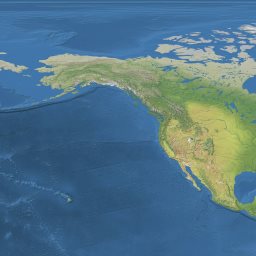
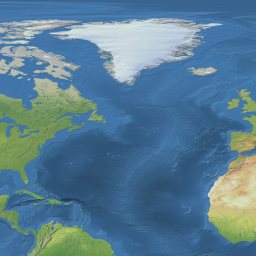
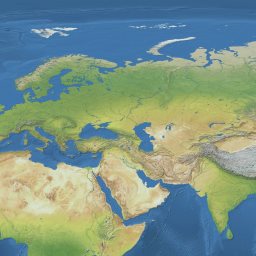
Quo Fuit places 7 dated presences for Erwin Panofsky across 7 places, from 1892 to 1947.
Each one keeps the sentence it was taken from and a link to its source.
Erwin Panofsky (March 30, 1892 – March 14, 1968) was a German art historian whose work represents a high point in the modern academic study of iconography, including his hugely influential Renaissance and Renascences in Western Art and his seminal Early Netherlandish Painting.Wikipedia, full article · CC BY-SA
Every dot is a place Erwin Panofsky is documented in, on a dated record. The interactive globe carries the full detail.
University of Hamburgattested“Following Gustav Pauli's invitation in December 1919 to teach art history at the University of Hamburg, Panofsky agreed on the condition of simultaneously pursuing habilitation.”source: Wikipedia: Erwin Panofsky
1929 to 1930period
Americaattested“Panofsky has already expressed interest in visiting America as early as 1929 on his correspondence with Fritz Saxl, and in 1930, he was invited by New York University (NYU) to serve as a Visiting Professor by recommendation from Goldschm…”source: Wikipedia: Erwin Panofsky
April 1935month
Institute for Advanced Studyattested“By this point, Panofsky had resolved never to return to Germany and was committed to establishing a permanent life in the United States.He finally secured a permanent position at the Institute for Advanced Study (IAS) in April 1935.”source: Wikipedia: Erwin Panofsky
April 1935month
Germanyattested“By this point, Panofsky had resolved never to return to Germany and was committed to establishing a permanent life in the United States.He finally secured a permanent position at the Institute for Advanced Study (IAS) in April 1935.”source: Wikipedia: Erwin Panofsky
1946 to 1970period
Zentralinstitut für Kunstgeschichteattested“Gerda Panofsky was unable to locate it, possibly because Ludwig Heinrich Heydenreich, who had studied under Panofsky, was in possession of the manuscript from 1946 to 1970, and brought it to Zentralinstitut für Kunstgeschichte, where the…”source: Wikipedia: Erwin Panofsky
1947 to 1948period
Harvard Universityattested“In 1947–1948 Panofsky was the Charles Eliot Norton professor at Harvard University; the lectures later became Early Netherlandish Painting.”source: Wikipedia: Erwin Panofsky
Open Quo Fuit to see these 7 presences on the
globe, filter them by date, and follow the journey year by year.
Zentralinstitut für Kunstgeschichte1 presence · 1946
Other places tied to Erwin Panofsky in the record
In each of these, a source puts Erwin Panofsky and the place in the same dated sentence without stating
that Erwin Panofsky was there. They are kept apart from the timeline above for exactly that reason:
a mention is not a presence, and Quo Fuit does not quietly promote one into the other.
1917year
Kasselmentioned“In the spring of 1917, he was considered fit for duty on the home front and was assigned government positions in Kassel and then Berlin, where he was responsible for distributing coal to civilians.”source: Wikipedia: Erwin Panofsky
December 1918month
Berlinmentioned“In December 1918, while working in Berlin, Panofsky applied for habilitation at the University of Heidelberg, proposing to submit either his 1915 expanded Dürers Kunsttheorie vornehmlich in ihrem Verhältnis zur Kunsttheorie der Italiener…”source: Wikipedia: Erwin Panofsky
December 1918month
Heidelberg Universitymentioned“In December 1918, while working in Berlin, Panofsky applied for habilitation at the University of Heidelberg, proposing to submit either his 1915 expanded Dürers Kunsttheorie vornehmlich in ihrem Verhältnis zur Kunsttheorie der Italiener…”source: Wikipedia: Erwin Panofsky
August 1919month
University of Tübingenmentioned“By August 1919, he shifted focus to the University of Tübingen but never finalized the thesis.”source: Wikipedia: Erwin Panofsky
1924year
Hamburgmentioned“Titled Die Entwicklung der Proportionslehre als Abbild der Stilentwicklung, the lecture successfully concluded his habilitation, granting him the venia legendi and securing his position at Hamburg.During this period, one of his early wor…”source: Wikipedia: Erwin Panofsky
1927year
Hamburgmentioned“Panofsky had previously met Sachs in 1927 when Sachs visited Hamburg to inspect Aby Warburg’s Institute.”source: Wikipedia: Erwin Panofsky
1933year
Metropolitan Museum of Artmentioned“He managed to secure two additional twelve-week lecture courses for the spring of 1933 at the Metropolitan Museum of Art.”source: Wikipedia: Erwin Panofsky
1933year
Hamburgmentioned“Although initially allowed to spend alternate terms in Hamburg and New York City, Panofsky’s appointment in Hamburg was terminated in 1933 after the Nazis came to power.”source: Wikipedia: Erwin Panofsky
1933year
Londonmentioned“Panofsky's first choice after 1933 was not to settle in America but to secure a position with the Warburg Library in London, which was central to his humanistic scholarship.”source: Wikipedia: Erwin Panofsky
1933year
Americamentioned“Panofsky's first choice after 1933 was not to settle in America but to secure a position with the Warburg Library in London, which was central to his humanistic scholarship.”source: Wikipedia: Erwin Panofsky
January 1934month
Hamburgmentioned“Panofsky returned to New York in January 1934 to fulfill a temporary commitment to Cook and NYU, while Dora and their two young sons stayed in Hamburg.”source: Wikipedia: Erwin Panofsky
January 1934month
New Yorkmentioned“Panofsky returned to New York in January 1934 to fulfill a temporary commitment to Cook and NYU, while Dora and their two young sons stayed in Hamburg.”source: Wikipedia: Erwin Panofsky
1934year
Princetonmentioned“Cook secure a two-year Visiting Professorship for Panofsky at NYU in the fall of 1934 with a salary of $6000, while Morey arranged housing and schooling for Panofsky's family in Princeton in exchange for his teaching in the Department of…”source: Wikipedia: Erwin Panofsky
1936year
Netherlandsmentioned“In 1936 he was awarded his first Honorary Doctorate, by Utrecht University in the Netherlands, which was facilitated by his friendship with the Utrecht professor Willem Vogelsang.”source: Wikipedia: Erwin Panofsky
Two people documented in the same place in the same year is a correlation, not a meeting.
Quo Fuit will never say they met without a source that says so.
How to read this page
Every line above is a dated fact taken from a source, with the sentence it came from and a link
back to it. Nothing is inferred, and a gap in the record is not evidence that someone was elsewhere.
A tag says how the fact is carried by its source: documented a structured,
explicitly dated record, attested a sentence that states the person was there,
mentioned a sentence that ties the person to the place without stating presence.
Sentences quoted from Wikipedia are available under CC BY-SA 4.0. Public domain books come from
Project Gutenberg. Quo Fuit claims no rights over these sources.
See Erwin Panofsky on a 3D globe, filter the record by date, and cross this life with another to find
where the two overlap.