Quo Fuit places 3 dated presences for Ernő Gerő across 3 places, from 1944 to 1980.
Each one keeps the sentence it was taken from and a link to its source.
Ernő Gerő (8 July 1898 – 12 March 1980) was a Hungarian Communist leader in the period after World War II and briefly the most powerful man in Hungary in 1956, as leader of the ruling Hungarian Working People's Party.Wikipedia, full article · CC BY-SA
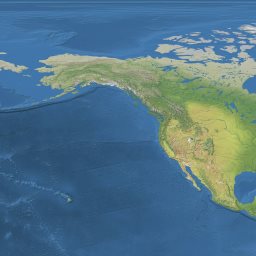
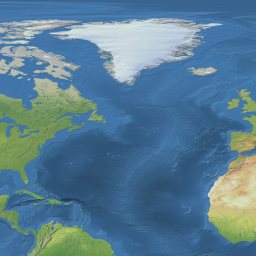
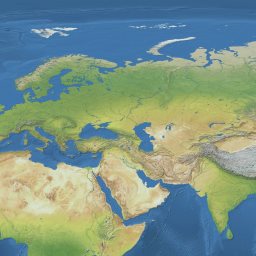
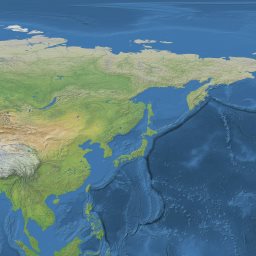
Every dot is a place Ernő Gerő is documented in, on a dated record. The interactive globe carries the full detail.
Where Ernő Gerő was documented, and when
November 1944month
Moscowattested“Gerő was among the first Communist functionaries to return to Hungary in early November 1944, and later that month participated in discussions in Moscow detailing the terms of Hungary's surrender in the war.”source: Wikipedia: Ernő Gerő
November 1944month
Hungaryattested“Gerő was among the first Communist functionaries to return to Hungary in early November 1944, and later that month participated in discussions in Moscow detailing the terms of Hungary's surrender in the war.”source: Wikipedia: Ernő Gerő
1980year
Budapestattested“He died in Budapest in 1980 at the age of 81.”source: Wikipedia: Ernő Gerő
Open Quo Fuit to see these 3 presences on the
globe, filter them by date, and follow the journey year by year.
In each of these, a source puts Ernő Gerő and the place in the same dated sentence without stating
that Ernő Gerő was there. They are kept apart from the timeline above for exactly that reason:
a mention is not a presence, and Quo Fuit does not quietly promote one into the other.
September 1921month
Hungarymentioned“He returned illegally to Hungary in September 1921 and was arrested after twelve months.”source: Wikipedia: Ernő Gerő
1925 to 1928period
Francementioned“Already speaking seven languages, he was hired by the Comintern in 1925, which immediately sent him to a factory for six months to learn Russian; he was then sent to France, where he headed the Hungarian subsection of the French Communis…”source: Wikipedia: Ernő Gerő
1944year
Szegedmentioned“Ernő Gerő's speech at the Szeged rally held on November 7 ; Új Dunántúl Könyvkiadó, Pécs, 1944 * The Hungarian Communist Party.”source: Wikipedia: Ernő Gerő
January 1945month
Budapestmentioned“Gerő finally settled in Budapest during the last stages of the Budapest offensive in January 1945, and began heading the party apparatus in the capital.”source: Wikipedia: Ernő Gerő
June 1953month
Moscowmentioned“In June 1953, Gerő took part in a party delegation to Moscow, after which he adopted a self-critical stance regarding the political and economic mistakes and excesses committed since 1948; however, this did not lead to a change in policy.”source: Wikipedia: Ernő Gerő
28 October 1956exact date
Soviet Unionmentioned“On 28 October 1956, the deposed Gerő was evacuated from Hungary to the Soviet Union, where he was given a position at the Institute of Economics of the Academy of Sciences.”source: Wikipedia: Ernő Gerő
28 October 1956exact date
Hungarymentioned“On 28 October 1956, the deposed Gerő was evacuated from Hungary to the Soviet Union, where he was given a position at the Institute of Economics of the Academy of Sciences.”source: Wikipedia: Ernő Gerő
Two people documented in the same place in the same year is a correlation, not a meeting.
Quo Fuit will never say they met without a source that says so.
How to read this page
Every line above is a dated fact taken from a source, with the sentence it came from and a link
back to it. Nothing is inferred, and a gap in the record is not evidence that someone was elsewhere.
A tag says how the fact is carried by its source: documented a structured,
explicitly dated record, attested a sentence that states the person was there,
mentioned a sentence that ties the person to the place without stating presence.
Sentences quoted from Wikipedia are available under CC BY-SA 4.0. Public domain books come from
Project Gutenberg. Quo Fuit claims no rights over these sources.
See Ernő Gerő on a 3D globe, filter the record by date, and cross this life with another to find
where the two overlap.