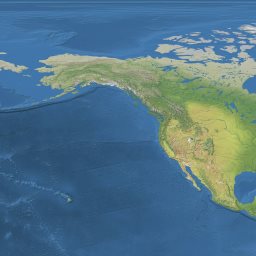
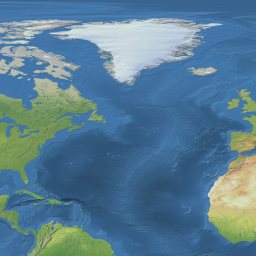
Quo Fuit places 7 dated presences for Emilio Segrè across 5 places, from 1905 to 1955.
Each one keeps the sentence it was taken from and a link to its source.
Emilio Gino Segrè (1 February 1905 – 22 April 1989) was an Italian-American nuclear physicist and radiochemist who discovered the elements technetium and astatine, and the antiproton, a subatomic antiparticle, for which he was awarded the Nobel Prize in Physics in 1959, along with Owen Chamberlain.Wikipedia, full article · CC BY-SA
Every dot is a place Emilio Segrè is documented in, on a dated record. The interactive globe carries the full detail.
Where Emilio Segrè was documented, and when
1 February 1905exact date
Tivoli, Italyattested“Emilio Gino Segrè was born into a Sephardic Jewish family in Tivoli, near Rome, on 1 February 1905, the son of Giuseppe Segrè, a businessman who owned a paper mill, and Amelia Susanna Treves.”source: Wikipedia: Emilio Segrè
1 February 1905exact date
Romeattested“Emilio Gino Segrè was born into a Sephardic Jewish family in Tivoli, near Rome, on 1 February 1905, the son of Giuseppe Segrè, a businessman who owned a paper mill, and Amelia Susanna Treves.”source: Wikipedia: Emilio Segrè
1917year
Tivoli, Italyattested“He was educated at the ginnasio in Tivoli and, after the family moved to Rome in 1917, the ginnasio and liceo in Rome.”source: Wikipedia: Emilio Segrè
1917year
Romeattested“He was educated at the ginnasio in Tivoli and, after the family moved to Rome in 1917, the ginnasio and liceo in Rome.”source: Wikipedia: Emilio Segrè
June 1938month
Californiaattested“In June 1938, Segrè paid a summer visit to California to study the short-lived isotopes of technetium, which did not survive being mailed to Italy.”source: Wikipedia: Emilio Segrè
June 1938month
Italyattested“In June 1938, Segrè paid a summer visit to California to study the short-lived isotopes of technetium, which did not survive being mailed to Italy.”source: Wikipedia: Emilio Segrè
1955year
University of California, Berkeleyattested“He moved his family from Berkeley to nearby Lafayette, California, in 1955.”source: Wikipedia: Emilio Segrè
Open Quo Fuit to see these 7 presences on the
globe, filter them by date, and follow the journey year by year.
In each of these, a source puts Emilio Segrè and the place in the same dated sentence without stating
that Emilio Segrè was there. They are kept apart from the timeline above for exactly that reason:
a mention is not a presence, and Quo Fuit does not quietly promote one into the other.
July 1922month
University of Rome La Sapienzamentioned“He graduated in July 1922 and enrolled in the University of Rome La Sapienza as an engineering student.”source: Wikipedia: Emilio Segrè
1933year
Italymentioned“After the Nazi Party came to power in Germany in 1933, she had emigrated to Italy, where she worked as a secretary and an interpreter.”source: Wikipedia: Emilio Segrè
1933year
Germanymentioned“After the Nazi Party came to power in Germany in 1933, she had emigrated to Italy, where she worked as a secretary and an interpreter.”source: Wikipedia: Emilio Segrè
1934year
Breslaumentioned“In 1934, he met Elfriede Spiro, a Jewish woman whose family had come from Ostrowo in West Prussia, but had fled to Breslau when that part of Prussia became part of Poland after World War I.”source: Wikipedia: Emilio Segrè
2 February 1936exact date
Great Synagogue of Romementioned“The two were married at the Great Synagogue of Rome on 2 February 1936.”source: Wikipedia: Emilio Segrè
November 1938month
Mexicomentioned“In November 1938 and February 1939 they made quick trips to Mexico to exchange their tourist visas for immigration visa.”source: Wikipedia: Emilio Segrè
April 1944month
Oak Ridge National Laboratorymentioned“The first sample plutonium produced in the nuclear reactor at Oak Ridge was received in April 1944.”source: Wikipedia: Emilio Segrè
University of California, Berkeleymentioned“He left Los Alamos in January 1946 and returned to Berkeley.”source: Wikipedia: Emilio Segrè
1952year
University of California, Berkeleymentioned“After turning down offers from IBM and the Brookhaven National Laboratory, Segrè returned to Berkeley in 1952.”source: Wikipedia: Emilio Segrè
1963year
American Philosophical Societymentioned“He was elected to the American Philosophical Society in 1963.”source: Wikipedia: Emilio Segrè
1970year
Lawrence Livermore Laboratorymentioned“He supported Teller's successful bid to separate the Lawrence Berkeley Laboratory from the Lawrence Livermore Laboratory in 1970.”source: Wikipedia: Emilio Segrè
1973year
American Academy of Arts and Sciencesmentioned“He was elected to the American Academy of Arts and Sciences in 1973.”source: Wikipedia: Emilio Segrè
Two people documented in the same place in the same year is a correlation, not a meeting.
Quo Fuit will never say they met without a source that says so.
How to read this page
Every line above is a dated fact taken from a source, with the sentence it came from and a link
back to it. Nothing is inferred, and a gap in the record is not evidence that someone was elsewhere.
A tag says how the fact is carried by its source: documented a structured,
explicitly dated record, attested a sentence that states the person was there,
mentioned a sentence that ties the person to the place without stating presence.
Sentences quoted from Wikipedia are available under CC BY-SA 4.0. Public domain books come from
Project Gutenberg. Quo Fuit claims no rights over these sources.
See Emilio Segrè on a 3D globe, filter the record by date, and cross this life with another to find
where the two overlap.