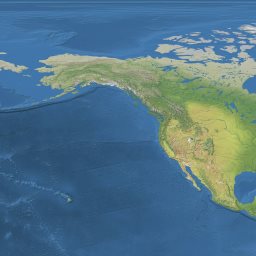
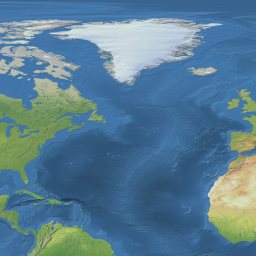
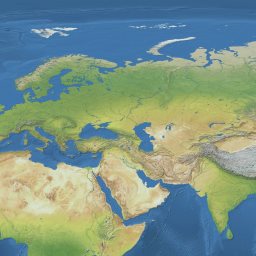
Quo Fuit places 5 dated presences for Eleanor of Castile across 5 places, from 1241 to 1291.
Each one keeps the sentence it was taken from and a link to its source.
Eleanor of Castile (1241 – 28 November 1290) was Queen of England as the first wife of Edward I.Wikipedia, full article · CC BY-SA
Every dot is a place Eleanor of Castile is documented in, on a dated record. The interactive globe carries the full detail.
Where Eleanor of Castile was documented, and when
February 1241month
Andalusiaattested“Because her parents were separated for 13 months while King Ferdinand was on a military campaign in Andalusia – from which he returned to the north of Spain in February 1241 – Eleanor was probably born towards the end of that year.”source: Wikipedia: Eleanor of Castile
1278year
Englandattested“Edward and Eleanor regretted allowing Joan of Ponthieu to foster Joan; when six-year-old Joan travelled to England in 1278, they found she had been spoilt; she was a spirited child and at times defiant.”source: Wikipedia: Eleanor of Castile
August 1289month
Gasconyattested“Eleanor returned from Gascony in August 1289, and there are signs from early 1290 that Eleanor may have been aware of her impending death.”source: Wikipedia: Eleanor of Castile
January 1291month
Abbey of Clunyattested“Edward was greatly affected by Eleanor's death, shown for instance in his January 1291 letter to the abbot of Cluny in France, in which he sought prayers for the soul of the wife "whom living we dearly cherished, and whom dead we cannot…”source: Wikipedia: Eleanor of Castile
January 1291month
Franceattested“Edward was greatly affected by Eleanor's death, shown for instance in his January 1291 letter to the abbot of Cluny in France, in which he sought prayers for the soul of the wife "whom living we dearly cherished, and whom dead we cannot…”source: Wikipedia: Eleanor of Castile
Open Quo Fuit to see these 5 presences on the
globe, filter them by date, and follow the journey year by year.
Other places tied to Eleanor of Castile in the record
In each of these, a source puts Eleanor of Castile and the place in the same dated sentence without stating
that Eleanor of Castile was there. They are kept apart from the timeline above for exactly that reason:
a mention is not a presence, and Quo Fuit does not quietly promote one into the other.
Francementioned“In 1252, Alfonso X resurrected an ancestral claim to the Duchy of Gascony in the south of Aquitaine – the last possession of the Kings of England in France – which he claimed had formed part of the dowry of Eleanor of England.”source: Wikipedia: Eleanor of Castile
1255year
Englandmentioned“Eleanor travelled to England alone in mid-1255, and Edward followed her a few months later.”source: Wikipedia: Eleanor of Castile
June 1264month
Windsor Castlementioned“Rumours Eleanor was seeking fresh troops from Castile led the baronial leader Simon de Montfort to order her removal from Windsor Castle in June 1264 after the defeat of the royalist army at the Battle of Lewes.”source: Wikipedia: Eleanor of Castile
June 1264month
Battle of Lewesmentioned“Rumours Eleanor was seeking fresh troops from Castile led the baronial leader Simon de Montfort to order her removal from Windsor Castle in June 1264 after the defeat of the royalist army at the Battle of Lewes.”source: Wikipedia: Eleanor of Castile
5 September 1264exact date
Westminster Abbeymentioned“1264 – 5 September 1264), buried in Westminster Abbey.”source: Wikipedia: Eleanor of Castile
Battle of Eveshammentioned“After Edward's and Henry's army defeated the baronial army at the Battle of Evesham in 1265, Edward took a major role in reforming the government, and Eleanor rose to prominence.”source: Wikipedia: Eleanor of Castile
7 September 1265exact date
Westminster Abbeymentioned“#Joanna (January 1265 – before 7 September 1265), buried in Westminster Abbey.”source: Wikipedia: Eleanor of Castile
7 September 1265exact date
Westminstermentioned“#Joanna (January 1265 – before 7 September 1265), buried in Westminster Abbey.”source: Wikipedia: Eleanor of Castile
13 July 1266exact date
Wallingford, Oxfordshirementioned“#John (13 July 1266 – 3 August 1271), died at Wallingford, in the custody of his granduncle, Richard, Earl of Cornwall.”source: Wikipedia: Eleanor of Castile
6 May 1268exact date
Westminster Abbeymentioned“#Henry (before 6 May 1268 – 16 October 1274), buried in Westminster Abbey.”source: Wikipedia: Eleanor of Castile
6 May 1268exact date
Westminstermentioned“#Henry (before 6 May 1268 – 16 October 1274), buried in Westminster Abbey.”source: Wikipedia: Eleanor of Castile
May 1271month
Acre, Israelmentioned“Louis died at Carthage before they arrived; the couple spent the winter in Sicily then proceeded to Acre in the Holy Land, where they arrived in May 1271.”source: Wikipedia: Eleanor of Castile
Every line above is a dated fact taken from a source, with the sentence it came from and a link
back to it. Nothing is inferred, and a gap in the record is not evidence that someone was elsewhere.
A tag says how the fact is carried by its source: documented a structured,
explicitly dated record, attested a sentence that states the person was there,
mentioned a sentence that ties the person to the place without stating presence.
Sentences quoted from Wikipedia are available under CC BY-SA 4.0. Public domain books come from
Project Gutenberg. Quo Fuit claims no rights over these sources.
See Eleanor of Castile on a 3D globe, filter the record by date, and cross this life with another to find
where the two overlap.