Quo Fuit places 23 dated presences for Dylan Thomas across 16 places, from 1914 to 1951.
Each one keeps the sentence it was taken from and a link to its source.
Dylan Marlais Thomas (27 October 1914 – 9 November 1953) was a Welsh poet and writer, whose works include the poems "Do not go gentle into that good night" and "And death shall have no dominion", as well as the "play for voices" Under Milk Wood.Wikipedia, full article · CC BY-SA
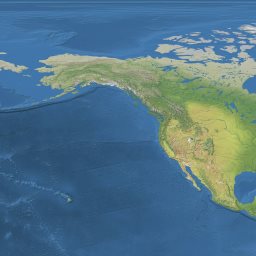
Every dot is a place Dylan Thomas is documented in, on a dated record. The interactive globe carries the full detail.
Where Dylan Thomas was documented, and when
27 October 1914exact date
Swanseaattested“Dylan Thomas was born on 27 October 1914 in Swansea, the son of Florence Hannah (née Williams; 1882–1958), a seamstress, and David John 'Jack' Thomas (1876–1952), a teacher.”source: Wikipedia: Dylan Thomas
October 1925month
Swanseaattested“In October 1925, Thomas enrolled at Swansea Grammar School for boys, in Mount Pleasant, where his father taught English.”source: Wikipedia: Dylan Thomas
October 1925month
Swansea Grammar Schoolattested“In October 1925, Thomas enrolled at Swansea Grammar School for boys, in Mount Pleasant, where his father taught English.”source: Wikipedia: Dylan Thomas
May 1934month
Walesattested“In May 1934, Thomas made his first visit to Laugharne, "the strangest town in Wales", as he described it in an extended letter to Pamela Hansford Johnson, in which he also writes about the town's estuarine bleakness, and the dismal lives…”source: Wikipedia: Dylan Thomas
May 1934month
Laugharneattested“In May 1934, Thomas made his first visit to Laugharne, "the strangest town in Wales", as he described it in an extended letter to Pamela Hansford Johnson, in which he also writes about the town's estuarine bleakness, and the dismal lives…”source: Wikipedia: Dylan Thomas
July 1940month
Blashfordattested“They left Laugharne in July 1940 and then led a peripatetic lifestyle over the next few years, returning to Blashford and subsequently living at Marshfield (1940), Bishopston (1940–41), Chelsea, in London (1942–43), Talsarn (1942–44), Ea…”source: Wikipedia: Dylan Thomas
July 1940month
Laugharneattested“They left Laugharne in July 1940 and then led a peripatetic lifestyle over the next few years, returning to Blashford and subsequently living at Marshfield (1940), Bishopston (1940–41), Chelsea, in London (1942–43), Talsarn (1942–44), Ea…”source: Wikipedia: Dylan Thomas
July 1940month
Marshfield, Gloucestershireattested“They left Laugharne in July 1940 and then led a peripatetic lifestyle over the next few years, returning to Blashford and subsequently living at Marshfield (1940), Bishopston (1940–41), Chelsea, in London (1942–43), Talsarn (1942–44), Ea…”source: Wikipedia: Dylan Thomas
July 1940month
Londonattested“They left Laugharne in July 1940 and then led a peripatetic lifestyle over the next few years, returning to Blashford and subsequently living at Marshfield (1940), Bishopston (1940–41), Chelsea, in London (1942–43), Talsarn (1942–44), Ea…”source: Wikipedia: Dylan Thomas
July 1940month
Chippenhamattested“Hounded by creditors, Thomas and his family left Laugharne in July 1940 and moved to the home of critic John Davenport in Marshfield near Chippenham in Gloucestershire.”source: Wikipedia: Dylan Thomas
July 1940month
Gloucestershireattested“Hounded by creditors, Thomas and his family left Laugharne in July 1940 and moved to the home of critic John Davenport in Marshfield near Chippenham in Gloucestershire.”source: Wikipedia: Dylan Thomas
1941year
Blashfordattested“He would subsequently be recognised as engaged in essential war work through his role in broadcasting for the BBC and documentary film making, work he took up in 1941 after he and Caitlin moved to London, leaving their son with Caitlin's…”source: Wikipedia: Dylan Thomas
1941year
Londonattested“He would subsequently be recognised as engaged in essential war work through his role in broadcasting for the BBC and documentary film making, work he took up in 1941 after he and Caitlin moved to London, leaving their son with Caitlin's…”source: Wikipedia: Dylan Thomas
July 1944month
Llangainattested“In July 1944, with the threat in London of German flying bombs, Thomas moved to the family cottage at Blaencwm near Llangain, Carmarthenshire, where he resumed writing poetry, completing Holy Spring and Vision and Prayer.”source: Wikipedia: Dylan Thomas
In each of these, a source puts Dylan Thomas and the place in the same dated sentence without stating
that Dylan Thomas was there. They are kept apart from the timeline above for exactly that reason:
a mention is not a presence, and Quo Fuit does not quietly promote one into the other.
1933year
Londonmentioned“In 1933, Thomas visited London for probably the first time.”source: Wikipedia: Dylan Thomas
July 1933month
Swanseamentioned“Bert Trick has provided an extensive account of an Oswald Mosley rally in the Plaza cinema in Swansea in July 1933 that he and Thomas attended.”source: Wikipedia: Dylan Thomas
October 1933month
Mumblesmentioned“Between October 1933 and March 1934, for example, Thomas and his fellow actors took part in five productions at the Mumbles theatre, as well as nine touring performances.”source: Wikipedia: Dylan Thomas
11 July 1937exact date
Penzancementioned“They married at the register office in Penzance, Cornwall, on 11 July 1937.”source: Wikipedia: Dylan Thomas
1938year
United Statesmentioned“Two years later, in 1938, Thomas won the Oscar Blumenthal Prize for Poetry; it was also the year in which New Directions offered to be his publisher in the United States.”source: Wikipedia: Dylan Thomas
May 1938month
Walesmentioned“In May 1938 they moved to Wales, to the village of Laugharne, Carmarthenshire where they rented a cottage in Gosport Street before moving into 'Sea View', a larger property, a couple of months later.”source: Wikipedia: Dylan Thomas
1940year
Walesmentioned“Ten stories in his next book, Portrait of the Artist as a Young Dog (1940), were based less on lavish fantasy than those in The Map of Love and more on real-life romances featuring himself in Wales.”source: Wikipedia: Dylan Thomas
1940year
The Mapmentioned“Ten stories in his next book, Portrait of the Artist as a Young Dog (1940), were based less on lavish fantasy than those in The Map of Love and more on real-life romances featuring himself in Wales.”source: Wikipedia: Dylan Thomas
1941 to 1943period
Cardiganshirementioned“Between 1941 and 1943, they lived intermittently in Plas Gelli, Talsarn, in Cardiganshire.”source: Wikipedia: Dylan Thomas
March 1943month
Londonmentioned“In March 1943, Caitlin gave birth to a daughter, Aeronwy, in London.”source: Wikipedia: Dylan Thomas
September 1945month
Walesmentioned“By late September 1945, the Thomases had left Wales and were living with various friends in London.”source: Wikipedia: Dylan Thomas
September 1945month
Londonmentioned“By late September 1945, the Thomases had left Wales and were living with various friends in London.”source: Wikipedia: Dylan Thomas
1946 to 1947period
Oxfordshirementioned“Taylor), in the grounds of their Oxford home (1946–47) before moving to a property she purchased in the Oxfordshire village of South Leigh (1947–49).”source: Wikipedia: Dylan Thomas
April 1947month
Italymentioned“The following year, in April 1947, the Thomases travelled to Italy, after Thomas had been awarded a Society of Authors scholarship.”source: Wikipedia: Dylan Thomas
Two people documented in the same place in the same year is a correlation, not a meeting.
Quo Fuit will never say they met without a source that says so.
How to read this page
Every line above is a dated fact taken from a source, with the sentence it came from and a link
back to it. Nothing is inferred, and a gap in the record is not evidence that someone was elsewhere.
A tag says how the fact is carried by its source: documented a structured,
explicitly dated record, attested a sentence that states the person was there,
mentioned a sentence that ties the person to the place without stating presence.
Sentences quoted from Wikipedia are available under CC BY-SA 4.0. Public domain books come from
Project Gutenberg. Quo Fuit claims no rights over these sources.
See Dylan Thomas on a 3D globe, filter the record by date, and cross this life with another to find
where the two overlap.