Quo Fuit places 5 dated presences for Dōgen across 4 places, from 1217 to 1247.
Each one keeps the sentence it was taken from and a link to its source.
was a Japanese Zen Buddhist monk, writer, poet, philosopher, and founder of the Sōtō school of Zen in Japan.Wikipedia, full article · CC BY-SA
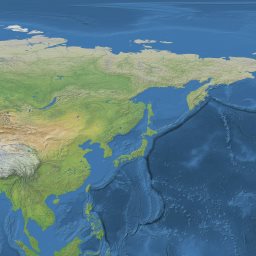
Every dot is a place Dōgen is documented in, on a dated record. The interactive globe carries the full detail.
Where Dōgen was documented, and when
1217year
Kennin-jiattested“In 1217, two years after the death of contemporary Zen Buddhist Myōan Eisai, Dōgen went to study at Kennin-ji Temple (), under Eisai's successor, Myōzen ().”source: Wikipedia: Dōgen
1223year
Chinaattested“In 1223, Dōgen and Myōzen undertook the dangerous passage across the East China Sea to China (Song dynasty) to study in Jing-de-si (Ching-te-ssu, ) monastery as Eisai had once done.”source: Wikipedia: Dōgen
1223year
East China Seaattested“In 1223, Dōgen and Myōzen undertook the dangerous passage across the East China Sea to China (Song dynasty) to study in Jing-de-si (Ching-te-ssu, ) monastery as Eisai had once done.”source: Wikipedia: Dōgen
1227year
Chinaattested“Other notable writings of Dōgen are: * Fukanzazengi (, General Advice on the Principles of Zazen), one volume; probably written immediately after Dōgen's return from China in 1227.”source: Wikipedia: Dōgen
1247year
Kamakura, Kanagawaattested“In 1247, the newly installed shōgun's regent, Hōjō Tokiyori, invited Dōgen to come to Kamakura to teach him.”source: Wikipedia: Dōgen
Open Quo Fuit to see these 5 presences on the
globe, filter them by date, and follow the journey year by year.
In each of these, a source puts Dōgen and the place in the same dated sentence without stating
that Dōgen was there. They are kept apart from the timeline above for exactly that reason:
a mention is not a presence, and Quo Fuit does not quietly promote one into the other.
1227 to 1228period
Japanmentioned“Dōgen returned to Japan in 1227 or 1228, going back to stay at Kennin-ji, where he had trained previously.”source: Wikipedia: Dōgen
1227 to 1228period
Kennin-jimentioned“Dōgen returned to Japan in 1227 or 1228, going back to stay at Kennin-ji, where he had trained previously.”source: Wikipedia: Dōgen
1243year
Echizen Provincementioned“In 1243, Hatano Yoshishige () offered to relocate Dōgen's community to Echizen province, far to the north of Kyōto.”source: Wikipedia: Dōgen
1248year
Eihei-jimentioned“Dōgen made the rather long journey east to provide the shōgun with lay ordination, and then returned to Eihei-ji in 1248.”source: Wikipedia: Dōgen
How to read this page
Every line above is a dated fact taken from a source, with the sentence it came from and a link
back to it. Nothing is inferred, and a gap in the record is not evidence that someone was elsewhere.
A tag says how the fact is carried by its source: documented a structured,
explicitly dated record, attested a sentence that states the person was there,
mentioned a sentence that ties the person to the place without stating presence.
Sentences quoted from Wikipedia are available under CC BY-SA 4.0. Public domain books come from
Project Gutenberg. Quo Fuit claims no rights over these sources.
See Dōgen on a 3D globe, filter the record by date, and cross this life with another to find
where the two overlap.