Quo Fuit places 3 dated presences for Conrad II of Italy across 3 places, from 1074 to 1101.
Each one keeps the sentence it was taken from and a link to its source.
Conrad II of Italy, also known as Conrad (III) (12 February 1074 – 27 July 1101), was the Duke of Lower Lorraine (1076–1087), King of Germany (1087–1098) and King of Italy (1093–1098).Wikipedia, full article · CC BY-SA
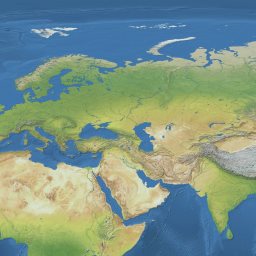
Every dot is a place Conrad II of Italy is documented in, on a dated record. The interactive globe carries the full detail.
Where Conrad II of Italy was documented, and when
12 February 1074exact date
Hersfeld Abbeyattested“Conrad was born on 12 February 1074 at Hersfeld Abbey while his father was fighting against the Saxon rebellion.”source: Wikipedia: Conrad II of Italy
12 February 1074exact date
Bad Hersfeldattested“Conrad was born on 12 February 1074 at Hersfeld Abbey while his father was fighting against the Saxon rebellion.”source: Wikipedia: Conrad II of Italy
27 July 1101exact date
Florenceattested“He died unexpectedly of a fever at the age of twenty-seven on 27 July 1101 in Florence.”source: Wikipedia: Conrad II of Italy
Open Quo Fuit to see these 3 presences on the
globe, filter them by date, and follow the journey year by year.
Other places tied to Conrad II of Italy in the record
In each of these, a source puts Conrad II of Italy and the place in the same dated sentence without stating
that Conrad II of Italy was there. They are kept apart from the timeline above for exactly that reason:
a mention is not a presence, and Quo Fuit does not quietly promote one into the other.
1075year
Goslarmentioned“After Henry's victory against the Saxons, he arranged for an assembly at Goslar on Christmas Day 1075 to swear an oath recognising Conrad as his successor.”source: Wikipedia: Conrad II of Italy
Alpsmentioned“Early the next year (1077) he accompanied his father across the Alps on the way to Canossa, because there was nobody in Germany to which Henry could entrust his son.”source: Wikipedia: Conrad II of Italy
1077year
Canossamentioned“Early the next year (1077) he accompanied his father across the Alps on the way to Canossa, because there was nobody in Germany to which Henry could entrust his son.”source: Wikipedia: Conrad II of Italy
1077year
Germanymentioned“Early the next year (1077) he accompanied his father across the Alps on the way to Canossa, because there was nobody in Germany to which Henry could entrust his son.”source: Wikipedia: Conrad II of Italy
October 1080month
Mantuamentioned“In October 1080, Conrad was present in the camp when a force from northern Italy defeated the troops of Marchioness Matilda of Tuscany near Mantua.”source: Wikipedia: Conrad II of Italy
1081year
Germanymentioned“(Conrad was apparently back in Germany.) Otto of Northeim, speaking for the Saxons, "desired neither the son nor the father" since he had "often seen a bad calf begotten by a bad ox." In 1081, Henry entered Italy, where he endeavoured to…”source: Wikipedia: Conrad II of Italy
1082year
Diocese of Liègementioned“In 1082, while Conrad was in Italy, the peace of God was introduced into the diocese of Liège.”source: Wikipedia: Conrad II of Italy
Mainzmentioned“In April or May 1098 at an assembly held in Mainz, Conrad's father had him formally deposed and his younger brother, Henry V, elected in his place.”source: Wikipedia: Conrad II of Italy
How to read this page
Every line above is a dated fact taken from a source, with the sentence it came from and a link
back to it. Nothing is inferred, and a gap in the record is not evidence that someone was elsewhere.
A tag says how the fact is carried by its source: documented a structured,
explicitly dated record, attested a sentence that states the person was there,
mentioned a sentence that ties the person to the place without stating presence.
Sentences quoted from Wikipedia are available under CC BY-SA 4.0. Public domain books come from
Project Gutenberg. Quo Fuit claims no rights over these sources.
See Conrad II of Italy on a 3D globe, filter the record by date, and cross this life with another to find
where the two overlap.