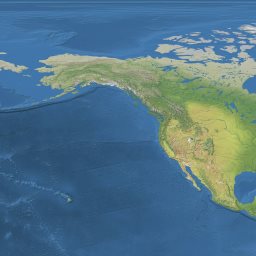
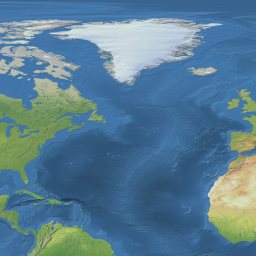
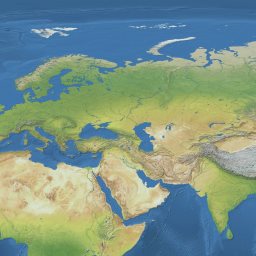
Quo Fuit places 16 dated presences for Claes Oldenburg across 13 places, from 1929 to 2022.
Each one keeps the sentence it was taken from and a link to its source.
Claes Oldenburg (January 28, 1929 – July 18, 2022) was a Swedish-born American sculptor best known for his public art installations, typically featuring large replicas of everyday objects.Wikipedia, full article · CC BY-SA
Every dot is a place Claes Oldenburg is documented in, on a dated record. The interactive globe carries the full detail.
Where Claes Oldenburg was documented, and when
28 January 1929exact date
Stockholmattested“Claes Oldenburg was born on January 28, 1929, in Stockholm, the son of Gösta Oldenburg and his wife Sigrid Elisabeth née Lindforss.”source: Wikipedia: Claes Oldenburg
1946 to 1950period
Yale Universityattested“He studied literature and art history at Yale University from 1946 to 1950, then returned to Chicago where he took classes at The School of the Art Institute of Chicago.”source: Wikipedia: Claes Oldenburg
1946 to 1950period
Chicagoattested“He studied literature and art history at Yale University from 1946 to 1950, then returned to Chicago where he took classes at The School of the Art Institute of Chicago.”source: Wikipedia: Claes Oldenburg
1956year
New Yorkattested“In 1956, he moved to New York, and for a time worked in the library of the Cooper Union Museum for the Arts of Decoration, where he also took the opportunity to learn more, on his own, about the history of art.”source: Wikipedia: Claes Oldenburg
New Yorkattested“Claes Oldenburg was married to his first wife Patty Mucha from 1960 to 1970, after Mucha moved to New York City in 1957 to become an artist.”source: Wikipedia: Claes Oldenburg
1957 to 1970period
New York Cityattested“Claes Oldenburg was married to his first wife Patty Mucha from 1960 to 1970, after Mucha moved to New York City in 1957 to become an artist.”source: Wikipedia: Claes Oldenburg
1963year
New Yorkattested“Oldenburg moved to Los Angeles in 1963 "because it was the most opposite thing to New York [he] could think of".”source: Wikipedia: Claes Oldenburg
1963year
Los Angelesattested“Oldenburg moved to Los Angeles in 1963 "because it was the most opposite thing to New York [he] could think of".”source: Wikipedia: Claes Oldenburg
1966year
Moderna Museetattested“He was honored with a solo exhibition of his work at the Moderna Museet (organized by Pontus Hultén), in 1966; the Museum of Modern Art, New York, in 1969; London's Tate Gallery in 1970 (chronicled in a 1970 twin-projection documentary b…”source: Wikipedia: Claes Oldenburg
1985year
Veniceattested“The couple's collaboration with Gehry also involved a return to performance for Oldenburg when the trio presented Il Corso del Coltello, in Venice, Italy, in 1985; other characters were portrayed by Germano Celant and Pontus Hultén.”source: Wikipedia: Claes Oldenburg
1996 to 2011period
California College of the Artsattested“Oldenburg and Coosje van Bruggen together received honorary degrees from the California College of the Arts, San Francisco, California, in 1996; University of Teesside, Middlesbrough, England, in 1999; Nova Scotia College of Art and Desi…”source: Wikipedia: Claes Oldenburg
1996 to 2011period
California Collegeattested“Oldenburg and Coosje van Bruggen together received honorary degrees from the California College of the Arts, San Francisco, California, in 1996; University of Teesside, Middlesbrough, England, in 1999; Nova Scotia College of Art and Desi…”source: Wikipedia: Claes Oldenburg
1996 to 2011period
Californiaattested“Oldenburg and Coosje van Bruggen together received honorary degrees from the California College of the Arts, San Francisco, California, in 1996; University of Teesside, Middlesbrough, England, in 1999; Nova Scotia College of Art and Desi…”source: Wikipedia: Claes Oldenburg
Other places tied to Claes Oldenburg in the record
In each of these, a source puts Claes Oldenburg and the place in the same dated sentence without stating
that Claes Oldenburg was there. They are kept apart from the timeline above for exactly that reason:
a mention is not a presence, and Quo Fuit does not quietly promote one into the other.
1936year
New Yorkmentioned“His father was then a Swedish diplomat stationed in New York and in 1936 was appointed consul general of Sweden to Chicago where Oldenburg grew up, attending the Latin School of Chicago.”source: Wikipedia: Claes Oldenburg
1936year
Chicagomentioned“His father was then a Swedish diplomat stationed in New York and in 1936 was appointed consul general of Sweden to Chicago where Oldenburg grew up, attending the Latin School of Chicago.”source: Wikipedia: Claes Oldenburg
1946 to 1950period
The School of the Art Institute of Chicagomentioned“He studied literature and art history at Yale University from 1946 to 1950, then returned to Chicago where he took classes at The School of the Art Institute of Chicago.”source: Wikipedia: Claes Oldenburg
1959year
New Yorkmentioned“Oldenburg's first one-man show, in 1959 at the Judson Gallery in New York, had shown figurative drawings and papier-mâché sculptures.”source: Wikipedia: Claes Oldenburg
May 1959month
Judson Memorial Churchmentioned“Oldenburg's first show which included three-dimensional works, in May 1959, was at the Judson Gallery, at Judson Memorial Church on Washington Square.”source: Wikipedia: Claes Oldenburg
December 1961month
New Yorkmentioned“In December 1961, he rented a store on Manhattan's Lower East Side to house "The Store", a month-long installation he had first presented at the Martha Jackson Gallery in New York, stocked with sculptures in the form of consumer goods.”source: Wikipedia: Claes Oldenburg
1967year
New Yorkmentioned“In 1967, New York city cultural adviser Sam Green realized Oldenburg's first outdoor public monument; Placid Civic Monument took the form of a Conceptual performance/action behind the Metropolitan Museum of Art in New York City, with a c…”source: Wikipedia: Claes Oldenburg
1967year
New York Citymentioned“In 1967, New York city cultural adviser Sam Green realized Oldenburg's first outdoor public monument; Placid Civic Monument took the form of a Conceptual performance/action behind the Metropolitan Museum of Art in New York City, with a c…”source: Wikipedia: Claes Oldenburg
1969year
Yale Universitymentioned“For example, the 1969 Lipstick (Ascending) on Caterpillar Tracks, was removed from its original place in Beinecke Plaza at Yale University, and "circulated on a loan basis to other campuses".”source: Wikipedia: Claes Oldenburg
1969year
Beinecke Plazamentioned“For example, the 1969 Lipstick (Ascending) on Caterpillar Tracks, was removed from its original place in Beinecke Plaza at Yale University, and "circulated on a loan basis to other campuses".”source: Wikipedia: Claes Oldenburg
1970 to 1996period
Oberlin Collegementioned“Oldenburg received honorary degrees from Oberlin College, Ohio, in 1970; Art Institute of Chicago, Illinois, in 1979; Bard College, New York, in 1995; and Royal College of Art, London, in 1996.”source: Wikipedia: Claes Oldenburg
1970year
Stedelijk Museummentioned“Oldenburg and his second wife, Coosje van Bruggen, met in 1970 when Oldenburg's first major retrospective traveled to the Stedelijk Museum in Amsterdam, where van Bruggen was a curator.”source: Wikipedia: Claes Oldenburg
1970year
Amsterdammentioned“Oldenburg and his second wife, Coosje van Bruggen, met in 1970 when Oldenburg's first major retrospective traveled to the Stedelijk Museum in Amsterdam, where van Bruggen was a curator.”source: Wikipedia: Claes Oldenburg
1971year
Otterlomentioned“Their first collaboration came when Oldenburg was commissioned to rework Trowel I, a 1971 sculpture of an oversize garden tool, for the grounds of the Kröller-Müller Museum in Otterlo in the Netherlands.”source: Wikipedia: Claes Oldenburg
Two people documented in the same place in the same year is a correlation, not a meeting.
Quo Fuit will never say they met without a source that says so.
How to read this page
Every line above is a dated fact taken from a source, with the sentence it came from and a link
back to it. Nothing is inferred, and a gap in the record is not evidence that someone was elsewhere.
A tag says how the fact is carried by its source: documented a structured,
explicitly dated record, attested a sentence that states the person was there,
mentioned a sentence that ties the person to the place without stating presence.
Sentences quoted from Wikipedia are available under CC BY-SA 4.0. Public domain books come from
Project Gutenberg. Quo Fuit claims no rights over these sources.
See Claes Oldenburg on a 3D globe, filter the record by date, and cross this life with another to find
where the two overlap.