Quo Fuit places 5 dated presences for Charles III of Spain across 5 places, from 1740 to 1763.
Each one keeps the sentence it was taken from and a link to its source.
Charles III (20 January 1716 – 14 December 1788) was King of Spain from 1759 until his death in 1788.Wikipedia, full article · CC BY-SA
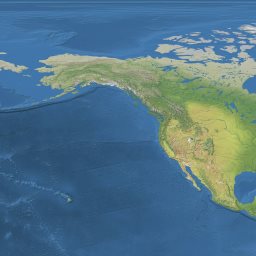
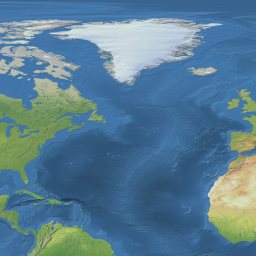
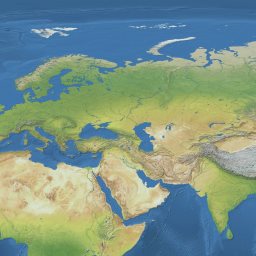
Every dot is a place Charles III of Spain is documented in, on a dated record. The interactive globe carries the full detail.
Where Charles III of Spain was documented, and when
3 February 1740exact date
Sicilyattested“On 3 February 1740, King Charles issued a proclamation containing 37 paragraphs, in which Jews were formally invited to return to Sicily, from where they had been brutally expelled in 1492.”source: Wikipedia: Charles III of Spain
1747year
Porticiattested“The eldest son of Charles, Infante Philip, Duke of Calabria, had learning difficulties and was thus taken out of the line of succession to any throne; he died in Portici, where he had been born, in 1747.”source: Wikipedia: Charles III of Spain
10 December 1758exact date
Villaviciosa de Odón, Madridattested“He named Charles his heir presumptive on 10 December 1758 before leaving Madrid to stay at Villaviciosa de Odón, where he died on 10 August 1759.”source: Wikipedia: Charles III of Spain
27 September 1760exact date
Buen Retiro Palaceattested“She died unexpectedly at the Buen Retiro Palace on the eastern outskirts of Madrid, aged 35, on 27 September 1760.”source: Wikipedia: Charles III of Spain
1763year
Kingdom of Great Britainattested“In the 1763 Treaty of Paris, Spain ceded Florida to Great Britain in exchange for the return of Havana and Manila.”source: Wikipedia: Charles III of Spain
Open Quo Fuit to see these 5 presences on the
globe, filter them by date, and follow the journey year by year.
Other places tied to Charles III of Spain in the record
In each of these, a source puts Charles III of Spain and the place in the same dated sentence without stating
that Charles III of Spain was there. They are kept apart from the timeline above for exactly that reason:
a mention is not a presence, and Quo Fuit does not quietly promote one into the other.
20 January 1716exact date
Royal Alcázar of Madridmentioned“On 20 January 1716, Elisabeth gave birth to the Infante Charles of Spain at the Royal Alcázar of Madrid.”source: Wikipedia: Charles III of Spain
27 December 1731exact date
Antibesmentioned“Charles left Spain on 20th October 1731 and traveled overland to Antibes; he then sailed to Tuscany, arriving at Livorno on 27 December 1731.”source: Wikipedia: Charles III of Spain
27 December 1731exact date
Tuscanymentioned“Charles left Spain on 20th October 1731 and traveled overland to Antibes; he then sailed to Tuscany, arriving at Livorno on 27 December 1731.”source: Wikipedia: Charles III of Spain
27 December 1731exact date
Livornomentioned“Charles left Spain on 20th October 1731 and traveled overland to Antibes; he then sailed to Tuscany, arriving at Livorno on 27 December 1731.”source: Wikipedia: Charles III of Spain
October 1732month
Parmamentioned“Despite the celebrations, Elisabeth Farnese urged her son to go on to Parma, which he did in October 1732, where he was warmly greeted.”source: Wikipedia: Charles III of Spain
1733year
Polish-Lithuanian Commonwealthmentioned“In 1733, the death of Augustus II, King of Poland, sparked a succession crisis in Poland.”source: Wikipedia: Charles III of Spain
10 May 1734exact date
Naplesmentioned“Charles had his triumphant entrance to Naples on 10 May 1734, through the old city gate at Capuana surrounded by the city councilors along with a group of people who threw money to the locals.”source: Wikipedia: Charles III of Spain
25 May 1734exact date
Bitontomentioned“Spanish troops led by the Count of Montemar attacked the Austrians on 25 May 1734 at Bitonto, and achieved a decisive victory.”source: Wikipedia: Charles III of Spain
2 September 1734exact date
Palermomentioned“Three weeks later, the Duke of Montemar left the mainland for Sicily where they arrived in Palermo on 2 September 1734, beginning a conquest of the island's Austrian-held fortresses that ended in early 1735.”source: Wikipedia: Charles III of Spain
1735year
Southern Italymentioned“Soon after, Charles led Spanish military campaigns in Italy and, by 1735, was recognized as King of Naples and Sicily under the terms of the Treaty of Vienna (1738), thereby restoring a Bourbon presence in southern Italy.”source: Wikipedia: Charles III of Spain
1735year
Italymentioned“Soon after, Charles led Spanish military campaigns in Italy and, by 1735, was recognized as King of Naples and Sicily under the terms of the Treaty of Vienna (1738), thereby restoring a Bourbon presence in southern Italy.”source: Wikipedia: Charles III of Spain
May 1738month
Dresdenmentioned“Maria Amalia was married by proxy at Dresden in May 1738, with her brother Frederick Christian, Elector of Saxony representing Charles.”source: Wikipedia: Charles III of Spain
19 June 1738exact date
Fondimentioned“The couple met for the first time on 19 June 1738 at Portella, a village on the frontier of the kingdom near Fondi.”source: Wikipedia: Charles III of Spain
Two people documented in the same place in the same year is a correlation, not a meeting.
Quo Fuit will never say they met without a source that says so.
How to read this page
Every line above is a dated fact taken from a source, with the sentence it came from and a link
back to it. Nothing is inferred, and a gap in the record is not evidence that someone was elsewhere.
A tag says how the fact is carried by its source: documented a structured,
explicitly dated record, attested a sentence that states the person was there,
mentioned a sentence that ties the person to the place without stating presence.
Sentences quoted from Wikipedia are available under CC BY-SA 4.0. Public domain books come from
Project Gutenberg. Quo Fuit claims no rights over these sources.
See Charles III of Spain on a 3D globe, filter the record by date, and cross this life with another to find
where the two overlap.