Quo Fuit places 7 dated presences for Carlo Maratta across 4 places, from 1625 to 1713.
Each one keeps the sentence it was taken from and a link to its source.
Carlo Maratta or Maratti (18 May 1625 to 15 December 1713) was an Italian Baroque painter and draughtsman, active principally in Rome where he was the leading painter in the second half of the 17th century.Wikipedia, full article · CC BY-SA
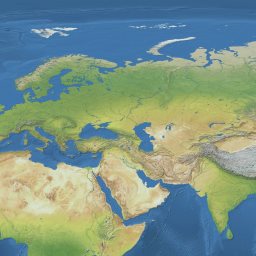
Every dot is a place Carlo Maratta is documented in, on a dated record. The interactive globe carries the full detail.
Where Carlo Maratta was documented, and when
18 May 1625exact date
Cameranoattested“Maratta was born on 18 May 1625 in Camerano (Marche), then part of the Papal States, as the son of Tommaso and Faustina Masini.”source: Wikipedia: Carlo Maratta
1636year
Romeattested“He moved to Rome in 1636 in the company of family friend Don Corintio Benicampi, secretary to Taddeo Barberini who was a nephew of pope Urbano VIII and brother of Cardinals Francesco Barberini and Antonio Barberini.”source: Wikipedia: Carlo Maratta
1645year
Romeattested“He also painted numerous English sitters during their visits to Rome on the Grand Tour, having sketched antiquities for John Evelyn as early as 1645.”source: Wikipedia: Carlo Maratta
1650year
Romeattested“Maratta’s first independent public work in Rome, in which he first moved away from Sacchi’s dominance, is the Adoration of the Shepherds (1650) for the church of San Giuseppe dei Falegnami.”source: Wikipedia: Carlo Maratta
1651 to 1656period
Sant'Isidoro a Capo le Caseattested“Between 1651 and 1656 Maratta decorated the Cappella Alaleona in Sant'Isidoro a Capo le Case, Rome; for this he painted three altarpiecesthe Marriage of the Virgin , the Death of St.”source: Wikipedia: Carlo Maratta
1713year
Romeattested“He died in 1713 in Rome, and was buried there in Santa Maria degli Angeli.”source: Wikipedia: Carlo Maratta
1713year
Santa Maria degli Angeli e dei Martiriattested“He died in 1713 in Rome, and was buried there in Santa Maria degli Angeli.”source: Wikipedia: Carlo Maratta
Open Quo Fuit to see these 7 presences on the
globe, filter them by date, and follow the journey year by year.
Santa Maria degli Angeli e dei Martiri1 presence · 1713
Other places tied to Carlo Maratta in the record
In each of these, a source puts Carlo Maratta and the place in the same dated sentence without stating
that Carlo Maratta was there. They are kept apart from the timeline above for exactly that reason:
a mention is not a presence, and Quo Fuit does not quietly promote one into the other.
1636year
Accademia di San Lucamentioned“In 1636 a debate between Sacchi and Pietro da Cortona, then the leading Roman painters, took place at the Accademia di San Luca, the academy of artists in Rome.”source: Wikipedia: Carlo Maratta
1646 to 1648period
Cameranomentioned“It was probably around 1646 to 1648 that Maratta undertook a journey to Camerano and Ancona in the Marche, during which he was able to see works by Titian and by local artists.”source: Wikipedia: Carlo Maratta
1646 to 1648period
Marchementioned“It was probably around 1646 to 1648 that Maratta undertook a journey to Camerano and Ancona in the Marche, during which he was able to see works by Titian and by local artists.”source: Wikipedia: Carlo Maratta
1672year
Loreto, Marchementioned“In 1672 Maratta travelled to Loreto to restore works by Annibale Carracci, Federico Barocci and Lorenzo Lotto, and in that year executed the Virgin with Saints for the altar in the Altieri Chapel of the Roman church of Santa Maria sopra…”source: Wikipedia: Carlo Maratta
1674year
Palazzo Altierimentioned“In 1674 Maratta was commissioned by Pope Clement X to fresco the ceiling of the salone in the Palazzo Altieri.”source: Wikipedia: Carlo Maratta
1680year
Romementioned“His workshop became the most prominent art studio in Rome of his time and, after the death of Bernini in 1680, he became the leading artist in Rome.”source: Wikipedia: Carlo Maratta
1686year
Pitti Palacementioned“Philip Neri () now in the Pitti Palace in Florence, The Virgin with Saints Carlo Borromeo and Ignatius of Loyola, and Angels () for the church of Santa Maria in Vallicella () and The Assumption of the Virgin with Doctors of the Church (1…”source: Wikipedia: Carlo Maratta
1686year
Santa Maria del Popolomentioned“Philip Neri () now in the Pitti Palace in Florence, The Virgin with Saints Carlo Borromeo and Ignatius of Loyola, and Angels () for the church of Santa Maria in Vallicella () and The Assumption of the Virgin with Doctors of the Church (1…”source: Wikipedia: Carlo Maratta
1689 to 1713period
Pantheon, Romementioned“Maratta’s activity as a director or designer of sculptural decorations was concentrated in the period 1689 to 1713, although it was by no means a new activityyears before he had presented drawings for the monument to Raphael in the Panth…”source: Wikipedia: Carlo Maratta
1700 to 1710period
Florencementioned“Andrea Corsini for the chapel of the Palazzo Corsini in Florence, the Virgin with Saints (1700–09) for the church of San Filippo Neri, Turin, commissioned by Emmanuel Philibert, Prince of Carignano, and the Baptism (1710) for the Certosa…”source: Wikipedia: Carlo Maratta
1700 to 1710period
Naplesmentioned“Andrea Corsini for the chapel of the Palazzo Corsini in Florence, the Virgin with Saints (1700–09) for the church of San Filippo Neri, Turin, commissioned by Emmanuel Philibert, Prince of Carignano, and the Baptism (1710) for the Certosa…”source: Wikipedia: Carlo Maratta
1702year
Raphael Roomsmentioned“In 1702 Maratta was appointed Director of the Antiquities of Rome, and Pope Clement XI commissioned him to restore the frescoes in the Raphael Rooms.”source: Wikipedia: Carlo Maratta
1704year
Stamford, Lincolnshirementioned“Martin in Stamford, Lincolnshire, and he made preparatory drawings for his own funerary monument (completed in 1704; Rome, Santa Maria degli Angeli), which was executed by the sculptor Francesco Moratti.”source: Wikipedia: Carlo Maratta
Two people documented in the same place in the same year is a correlation, not a meeting.
Quo Fuit will never say they met without a source that says so.
How to read this page
Every line above is a dated fact taken from a source, with the sentence it came from and a link
back to it. Nothing is inferred, and a gap in the record is not evidence that someone was elsewhere.
A tag says how the fact is carried by its source: documented a structured,
explicitly dated record, attested a sentence that states the person was there,
mentioned a sentence that ties the person to the place without stating presence.
Sentences quoted from Wikipedia are available under CC BY-SA 4.0. Public domain books come from
Project Gutenberg. Quo Fuit claims no rights over these sources.
See Carlo Maratta on a 3D globe, filter the record by date, and cross this life with another to find
where the two overlap.