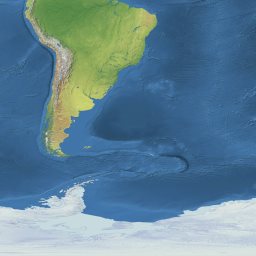
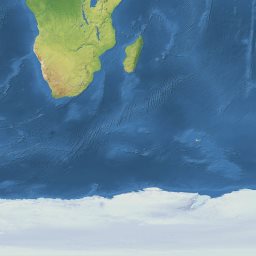
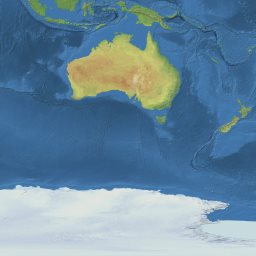
Quo Fuit places 4 dated presences for C. V. Raman across 4 places, from 1888 to 1928.
Each one keeps the sentence it was taken from and a link to its source.
Chandrasekhara Venkata Raman (IAST: Candraśēkhara Veṅkaṭarāmaṉ; 7 November 1888 – 21 November 1970) was an Indian physicist known for his work in the field of light scattering.Wikipedia, full article · CC BY-SA
Every dot is a place C. V. Raman is documented in, on a dated record. The interactive globe carries the full detail.
Where C. V. Raman was documented, and when
7 November 1888exact date
Tiruchirappalliattested“Chandrasekhara Venkata Raman was born on 7 November 1888 in Tiruchirappalli, India.”source: Wikipedia: C. V. Raman
1902year
Madrasattested“In 1902, Raman joined Presidency College in Madras (now Chennai) where his father had been transferred to teach mathematics and physics.”source: Wikipedia: C. V. Raman
1921year
Londonattested“During his brief visit of England in 1921, he managed to study how sound travels in the Whispring Gallery of the dome of St Paul's Cathedral in London that produces unusual sound effects.”source: Wikipedia: C. V. Raman
1928year
Moscow State Universityattested“With the news of Raman's death, Prime Minister Indira Gandhi publicly announced, saying, In 1928, Grigory Landsberg and Leonid Mandelstam at the Moscow State University independently discovered the Raman effect.”source: Wikipedia: C. V. Raman
Open Quo Fuit to see these 4 presences on the
globe, filter them by date, and follow the journey year by year.
In each of these, a source puts C. V. Raman and the place in the same dated sentence without stating
that C. V. Raman was there. They are kept apart from the timeline above for exactly that reason:
a mention is not a presence, and Quo Fuit does not quietly promote one into the other.
1892year
Visakhapatnammentioned“At my birth my father was earning the magnificent salary of ten rupees per month!" In 1892, his family moved to Visakhapatnam (then Vizagapatam or Vizag) in Andhra Pradesh as his father was appointed to the faculty of physics at Mrs A.V.”source: Wikipedia: C. V. Raman
1892year
Andhra Pradeshmentioned“At my birth my father was earning the magnificent salary of ten rupees per month!" In 1892, his family moved to Visakhapatnam (then Vizagapatam or Vizag) in Andhra Pradesh as his father was appointed to the faculty of physics at Mrs A.V.”source: Wikipedia: C. V. Raman
1907year
Madrasmentioned“Krishnaswami Iyer who was the Superintendent of Sea Customs at Madras, in 1907.”source: Wikipedia: C. V. Raman
June 1907month
Kolkatamentioned“He was posted in Calcutta (now Kolkata) as Assistant Accountant General in June 1907.”source: Wikipedia: C. V. Raman
1909year
Yangonmentioned“In 1909, Raman was transferred to Rangoon, British Burma (now Myanmar), to take up the position of currency officer.”source: Wikipedia: C. V. Raman
1910year
Yangonmentioned“Soon after he resumed office at Rangoon, he was transferred back to India at Nagpur, Maharashtra, in 1910.”source: Wikipedia: C. V. Raman
1910year
Nagpurmentioned“Soon after he resumed office at Rangoon, he was transferred back to India at Nagpur, Maharashtra, in 1910.”source: Wikipedia: C. V. Raman
1910year
Indiamentioned“Soon after he resumed office at Rangoon, he was transferred back to India at Nagpur, Maharashtra, in 1910.”source: Wikipedia: C. V. Raman
1911year
Kolkatamentioned“Even before he served a year in Nagpur, he was promoted to Accountant General in 1911 and again posted to Calcutta.”source: Wikipedia: C. V. Raman
1911year
Nagpurmentioned“Even before he served a year in Nagpur, he was promoted to Accountant General in 1911 and again posted to Calcutta.”source: Wikipedia: C. V. Raman
November 1921month
Bombay Harbourmentioned“Narkunda docked in Bombay Harbour (now Mumbai Harbour), Raman finished an article "The colour of the sea" that was published in the November 1921 issue of Nature.”source: Wikipedia: C. V. Raman
1924year
British Science Associationmentioned“As Compton later recollected "that it was probably the Toronto debate that led him to discover the Raman effect two years later." The Toronto debate was about the discussion on the existence of light quantum at the British Association fo…”source: Wikipedia: C. V. Raman
1924year
Torontomentioned“As Compton later recollected "that it was probably the Toronto debate that led him to discover the Raman effect two years later." The Toronto debate was about the discussion on the existence of light quantum at the British Association fo…”source: Wikipedia: C. V. Raman
1924year
University of Calcuttamentioned“In a speech at the University of Calcutta, he said, "I'm not flattered by the honour [Fellowship to the Royal Society in 1924] done to me.”source: Wikipedia: C. V. Raman
Two people documented in the same place in the same year is a correlation, not a meeting.
Quo Fuit will never say they met without a source that says so.
How to read this page
Every line above is a dated fact taken from a source, with the sentence it came from and a link
back to it. Nothing is inferred, and a gap in the record is not evidence that someone was elsewhere.
A tag says how the fact is carried by its source: documented a structured,
explicitly dated record, attested a sentence that states the person was there,
mentioned a sentence that ties the person to the place without stating presence.
Sentences quoted from Wikipedia are available under CC BY-SA 4.0. Public domain books come from
Project Gutenberg. Quo Fuit claims no rights over these sources.
See C. V. Raman on a 3D globe, filter the record by date, and cross this life with another to find
where the two overlap.