Quo Fuit places 3 dated presences for Bernardo Rossellino across 2 places, from 1436 to 1464.
Each one keeps the sentence it was taken from and a link to its source.
Bernardo di Matteo del Borra Gamberelli (1409–1464), better known as Bernardo Rossellino, was an Italian Renaissance sculptor and architect, the elder brother of the sculptor Antonio Rossellino.Wikipedia, full article · CC BY-SA
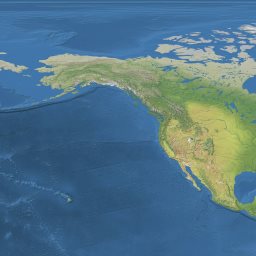
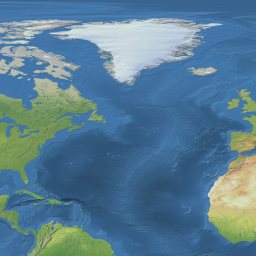
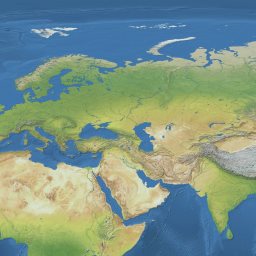
Every dot is a place Bernardo Rossellino is documented in, on a dated record. The interactive globe carries the full detail.
Where Bernardo Rossellino was documented, and when
1436year
Florenceattested“Bernardo Rossellino was back in Florence in 1436 to establish his own workshop and to join a crew of stonemasons already at work constructing the Aranci Cloister of the Badia.”source: Wikipedia: Bernardo Rossellino
1451year
Romeattested“Bernardo's career took an important turn when he traveled to Rome in 1451 to join the vast architectural team then engaged by Pope Nicholas V to revitalize the ancient city and its environs.”source: Wikipedia: Bernardo Rossellino
Other places tied to Bernardo Rossellino in the record
In each of these, a source puts Bernardo Rossellino and the place in the same dated sentence without stating
that Bernardo Rossellino was there. They are kept apart from the timeline above for exactly that reason:
a mention is not a presence, and Quo Fuit does not quietly promote one into the other.
1420year
Florencementioned“By 1420, Bernardo was certainly down in Florence and apprenticed to one of that city's better-known sculptors, perhaps Nanni di Bartolo, called "il Rosso (the redhead)".”source: Wikipedia: Bernardo Rossellino
1433year
Arezzomentioned“In 1433, Bernardo is recorded as being in Arezzo, employed by the Fraternita di Santa Maria della Misericordia to complete the facade of the Misericordia's headquarters.”source: Wikipedia: Bernardo Rossellino
1436year
San Marcomentioned“Documents indicate that Bernardo assumed a more decisive role at the suburban monastery of Santa Maria alle Campora whose cloister (1436) challenges that of Michelozzo at San Marco as the first such structure to have been erected in acco…”source: Wikipedia: Bernardo Rossellino
1444year
Florencementioned“Another project was the triumphal arch wall tomb erected in Florence's church of Santa Croce for the historian and humanist scholar Leonardo Bruni (died 1444), who had served as the State Chancellor of Florence.”source: Wikipedia: Bernardo Rossellino
1448year
Florencementioned“His understanding of the essential elements of antiquity is also apparent in the finest architectural achievement of Bernardo's early years, the Spinelli Cloister at Santa Croce in Florence (1448–51).”source: Wikipedia: Bernardo Rossellino
1448year
Santa Croce, Florencementioned“His understanding of the essential elements of antiquity is also apparent in the finest architectural achievement of Bernardo's early years, the Spinelli Cloister at Santa Croce in Florence (1448–51).”source: Wikipedia: Bernardo Rossellino
1451year
Santa Maria Novellamentioned“In 1451, his shop received an important sculptural commission for a tomb for the Beata Villana in Santa Maria Novella (now dismembered and in fragmentary state).”source: Wikipedia: Bernardo Rossellino
1455year
Romementioned“There, however, has been debate concerning the dating of the tomb, with some supporting a date in the late 1440s and others, believing that Bernardo could not have conceived its classical character prior to his stay in Rome, preferring a…”source: Wikipedia: Bernardo Rossellino
1459 to 1464period
Pienzamentioned“Despite his previous accomplishments, the true measure of Bernardo Rossellino's architectural place in history lies in the extraordinary project he undertook for Pope Pius II at Pienza between 1459 and 1464.”source: Wikipedia: Bernardo Rossellino
Two people documented in the same place in the same year is a correlation, not a meeting.
Quo Fuit will never say they met without a source that says so.
How to read this page
Every line above is a dated fact taken from a source, with the sentence it came from and a link
back to it. Nothing is inferred, and a gap in the record is not evidence that someone was elsewhere.
A tag says how the fact is carried by its source: documented a structured,
explicitly dated record, attested a sentence that states the person was there,
mentioned a sentence that ties the person to the place without stating presence.
Sentences quoted from Wikipedia are available under CC BY-SA 4.0. Public domain books come from
Project Gutenberg. Quo Fuit claims no rights over these sources.
See Bernardo Rossellino on a 3D globe, filter the record by date, and cross this life with another to find
where the two overlap.