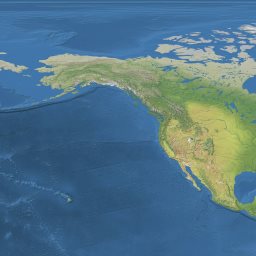
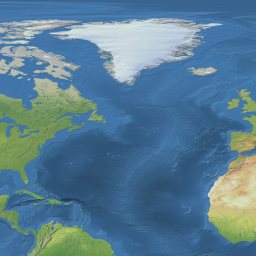
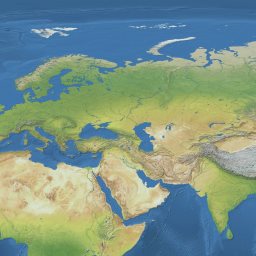
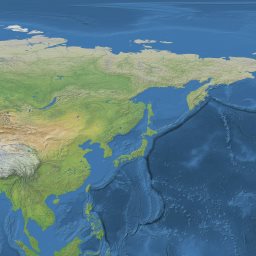
Quo Fuit places 6 dated presences for Antoine Bourdelle across 6 places, from 1861 to 1929.
Each one keeps the sentence it was taken from and a link to its source.
Antoine Bourdelle (30 October 1861 – 1 October 1929), born Émile Antoine Bordelles, was a French sculptor and teacher.Wikipedia, full article · CC BY-SA
Every dot is a place Antoine Bourdelle is documented in, on a dated record. The interactive globe carries the full detail.
Where Antoine Bourdelle was documented, and when
30 October 1861exact date
Montaubanattested“Émile Antoine Bourdelle was born at Montauban, Tarn-et-Garonne, in France on 30 October 1861.”source: Wikipedia: Antoine Bourdelle
30 October 1861exact date
Franceattested“Émile Antoine Bourdelle was born at Montauban, Tarn-et-Garonne, in France on 30 October 1861.”source: Wikipedia: Antoine Bourdelle
1903year
United Statesattested“Together with van Parys they had a son, Pierre Bourdelle (c.1903–1966) and Pierre became an artist most active in the United States, and notable for his work at Cincinnati Union Terminal in 1933.”source: Wikipedia: Antoine Bourdelle
1 October 1929exact date
Parisattested“Bourdelle, in poor health, died at Le Vésinet, near Paris, on 1 October 1929 and was interred in the Cimetière du Montparnasse, Paris, France.”source: Wikipedia: Antoine Bourdelle
1 October 1929exact date
Le Vésinetattested“Bourdelle, in poor health, died at Le Vésinet, near Paris, on 1 October 1929 and was interred in the Cimetière du Montparnasse, Paris, France.”source: Wikipedia: Antoine Bourdelle
1 October 1929exact date
Cimetière du Montparnasseattested“Bourdelle, in poor health, died at Le Vésinet, near Paris, on 1 October 1929 and was interred in the Cimetière du Montparnasse, Paris, France.”source: Wikipedia: Antoine Bourdelle
Open Quo Fuit to see these 6 presences on the
globe, filter them by date, and follow the journey year by year.
Other places tied to Antoine Bourdelle in the record
In each of these, a source puts Antoine Bourdelle and the place in the same dated sentence without stating
that Antoine Bourdelle was there. They are kept apart from the timeline above for exactly that reason:
a mention is not a presence, and Quo Fuit does not quietly promote one into the other.
1876year
Toulousementioned“In 1876, with the assistance of writer Émile Pouvillon, he received a scholarship to attend the School of Fine Arts in Toulouse, though he remained fiercely independent and resisted the formal program.”source: Wikipedia: Antoine Bourdelle
1884year
École des Beaux-Artsmentioned“In 1884, at the age of twenty-four, he earned second place in the competition to enter the École des Beaux-Arts in Paris.”source: Wikipedia: Antoine Bourdelle
1884year
Parismentioned“In 1884, at the age of twenty-four, he earned second place in the competition to enter the École des Beaux-Arts in Paris.”source: Wikipedia: Antoine Bourdelle
1913year
New Yorkmentioned“He was a participant in the 1913 Armory Show in New York, a founder and vice-president of the Parisian Salon des Tuileries.”source: Wikipedia: Antoine Bourdelle
1925year
Buenos Airesmentioned“He remained in Paris during the First World War, working on a commission for an art patron from Argentina, Rodolfo Acorta, a monument to General Alvear, which was inaugurated in Buenos Aires in 1925.”source: Wikipedia: Antoine Bourdelle
1925year
Parismentioned“He remained in Paris during the First World War, working on a commission for an art patron from Argentina, Rodolfo Acorta, a monument to General Alvear, which was inaugurated in Buenos Aires in 1925.”source: Wikipedia: Antoine Bourdelle
Two people documented in the same place in the same year is a correlation, not a meeting.
Quo Fuit will never say they met without a source that says so.
How to read this page
Every line above is a dated fact taken from a source, with the sentence it came from and a link
back to it. Nothing is inferred, and a gap in the record is not evidence that someone was elsewhere.
A tag says how the fact is carried by its source: documented a structured,
explicitly dated record, attested a sentence that states the person was there,
mentioned a sentence that ties the person to the place without stating presence.
Sentences quoted from Wikipedia are available under CC BY-SA 4.0. Public domain books come from
Project Gutenberg. Quo Fuit claims no rights over these sources.
See Antoine Bourdelle on a 3D globe, filter the record by date, and cross this life with another to find
where the two overlap.