Quo Fuit places 9 dated presences for Andrea Palladio across 7 places, from 1508 to 1580.
Each one keeps the sentence it was taken from and a link to its source.
Andrea Palladio (30 November 1508 – 19 August 1580) was an Italian Renaissance architect active in the Venetian Republic.Wikipedia, full article · CC BY-SA
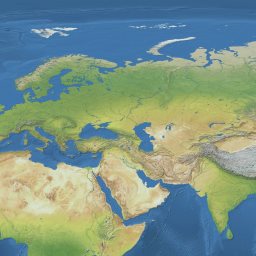
Every dot is a place Andrea Palladio is documented in, on a dated record. The interactive globe carries the full detail.
Where Andrea Palladio was documented, and when
30 November 1508exact date
Paduaattested“Palladio was born on 30 November 1508 in Padua and was given the name Andrea di Pietro della Gondola ().”source: Wikipedia: Andrea Palladio
April 1523month
Vicenzaattested“Bartolomeo Cavazza is said to have imposed particularly hard working conditions: Palladio fled the workshop in April 1523 and went to Vicenza, but was forced to return to fulfil his contract.”source: Wikipedia: Andrea Palladio
1537year
Villa Trissino (Cricoli)attested“File:Palladio Villa Godi photo.jpg|One of the first works by Palladio, Villa Godi (begun 1537) File:Villa godi valmarana saal.jpg|Hall of the Muses of the Villa Godi (1537–1542) File:VillaPiovene20070707-1 rect.jpg|Villa Piovene (1539) F…”source: Wikipedia: Andrea Palladio
1537year
Romeattested“File:Palladio Villa Godi photo.jpg|One of the first works by Palladio, Villa Godi (begun 1537) File:Villa godi valmarana saal.jpg|Hall of the Muses of the Villa Godi (1537–1542) File:VillaPiovene20070707-1 rect.jpg|Villa Piovene (1539) F…”source: Wikipedia: Andrea Palladio
1549year
Romeattested“He had travelled to Rome in 1549, hoping to become a Papal architect, but the death of Pope Paul III ended that ambition.”source: Wikipedia: Andrea Palladio
1576year
Santa Corona, Vicenzaattested“1576 (built 1576–1580): Valmarana Chapel in the Church of Santa Corona, for Isabella Nogarola Valmarana, Vicenza * 1576 (built 1577–1586): Church of Il Redentore, Venice * 1578 (built 1588–1590): Church of Santa Maria Nova, Vicenza (proj…”source: Wikipedia: Andrea Palladio
1576year
Udineattested“1576 (built 1576–1580): Valmarana Chapel in the Church of Santa Corona, for Isabella Nogarola Valmarana, Vicenza * 1576 (built 1577–1586): Church of Il Redentore, Venice * 1578 (built 1588–1590): Church of Santa Maria Nova, Vicenza (proj…”source: Wikipedia: Andrea Palladio
1576year
Udine Castleattested“1576 (built 1576–1580): Valmarana Chapel in the Church of Santa Corona, for Isabella Nogarola Valmarana, Vicenza * 1576 (built 1577–1586): Church of Il Redentore, Venice * 1578 (built 1588–1590): Church of Santa Maria Nova, Vicenza (proj…”source: Wikipedia: Andrea Palladio
19 August 1580exact date
Vicenzaattested“He died on 19 August 1580 at either Vicenza or Maser, and was buried in the church of Santa Corona in Vicenza.”source: Wikipedia: Andrea Palladio
Open Quo Fuit to see these 9 presences on the
globe, filter them by date, and follow the journey year by year.
Other places tied to Andrea Palladio in the record
In each of these, a source puts Andrea Palladio and the place in the same dated sentence without stating
that Andrea Palladio was there. They are kept apart from the timeline above for exactly that reason:
a mention is not a presence, and Quo Fuit does not quietly promote one into the other.
1524year
Vicenzamentioned“In 1524, when his contract was finished, he moved permanently to Vicenza, where he resided for most of his life.”source: Wikipedia: Andrea Palladio
1530 to 1580period
Romementioned“The Farnese Palace in Rome (1530–1580) by Sangallo introduced a new kind of Renaissance palace, with monumental blocks, ornate cornices, lateral wings and multiple stairways.”source: Wikipedia: Andrea Palladio
1541year
Romementioned“In 1541, he made a first trip to Rome, accompanied by Trissino, to see the classical monuments first-hand.”source: Wikipedia: Andrea Palladio
1542 to 1558period
Vicenzamentioned“File:Palazzo Thiene (Vicenza) - courtyard.jpg|Palazzo Thiene (1542–1558), (begun by Giulio Romano, revised and completed by Palladio) File:Basilica Palladiana (Vicenza) - facade on Piazza dei signori.jpg|Facade of the Basilica Palladiana…”source: Wikipedia: Andrea Palladio
1545 to 1547period
Romementioned“He took another, longer trip to Rome with Trissino from the autumn of 1545 to the first months of 1546, and then another trip in 1546–1547.”source: Wikipedia: Andrea Palladio
1546year
Vicenzamentioned“One of the most important works of his early Vicenza period is the Basilica Palladiana in Vicenza (1546), the palace of the city government.”source: Wikipedia: Andrea Palladio
1550 to 1572period
Vicenzamentioned“File:Palazzo Chiericati (Vicenza).jpg|Palazzo Chiericati (1550) in Vicenza File:Palazzo del Capitanio - Vicenza.jpg|Palazzo del Capitaniato (1565–1572) The success of the Basilica Palladiana propelled Palladio into the top ranks of the a…”source: Wikipedia: Andrea Palladio
1552year
Vicenzamentioned“In 1552, the Palazzo Porto located in Vicenza was rebuilt incorporating the Roman Renaissance element for façades.”source: Wikipedia: Andrea Palladio
1556year
Romementioned“Relative to his trips to Rome, Palladio developed three main palace types by 1556.”source: Wikipedia: Andrea Palladio
1556year
Udinementioned“The Palazzo Antonini in Udine, constructed in 1556, had a centralized hall with four columns and service spaces placed relatively toward one side.”source: Wikipedia: Andrea Palladio
1557year
Maser, Italymentioned“Villa Barbaro (begun 1557) at Maser was an imposing suburban villa, built for the brothers Marcantonio and Daniele Barbaro, who were respectively occupied with politics and religious affairs in the Veneto, or Venice region.”source: Wikipedia: Andrea Palladio
1557year
Venetomentioned“Villa Barbaro (begun 1557) at Maser was an imposing suburban villa, built for the brothers Marcantonio and Daniele Barbaro, who were respectively occupied with politics and religious affairs in the Veneto, or Venice region.”source: Wikipedia: Andrea Palladio
1557year
Venicementioned“File:Villa Barbaro panoramica fronte Marcok.jpg|The Villa Barbaro in Maser (begun 1557) File:VillaBarbaro 2007 07 08 09.jpg|The Nymphaeum of the Villa Barbaro File:Veronese Villa Barbaro.jpg|Detail of the Hall of Olympus, with frescoes b…”source: Wikipedia: Andrea Palladio
1560 to 1562period
Venicementioned“His first project in Venice was the cloister of the church of Santa Maria della Carità (1560–1561), followed by the refectory and then the interior of the San Giorgio Monastery (1560–1562).”source: Wikipedia: Andrea Palladio
Every line above is a dated fact taken from a source, with the sentence it came from and a link
back to it. Nothing is inferred, and a gap in the record is not evidence that someone was elsewhere.
A tag says how the fact is carried by its source: documented a structured,
explicitly dated record, attested a sentence that states the person was there,
mentioned a sentence that ties the person to the place without stating presence.
Sentences quoted from Wikipedia are available under CC BY-SA 4.0. Public domain books come from
Project Gutenberg. Quo Fuit claims no rights over these sources.
See Andrea Palladio on a 3D globe, filter the record by date, and cross this life with another to find
where the two overlap.