Quo Fuit places 6 dated presences for André Kertész across 5 places, from 1894 to 1982.
Each one keeps the sentence it was taken from and a link to its source.
André Kertész (2 July 1894 – 28 September 1985), born Andor Kertész, was a Hungarian-born photographer known for his groundbreaking contributions to photographic composition and the photo essay.Wikipedia, full article · CC BY-SA
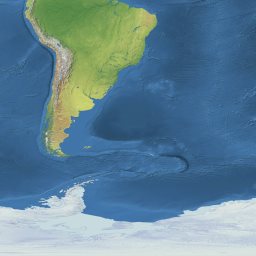
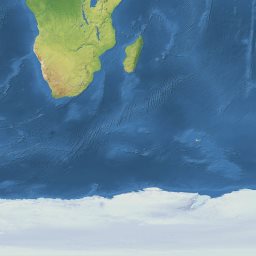
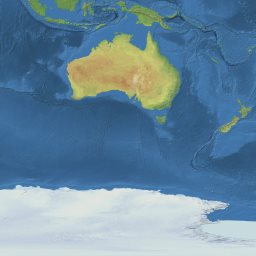
Every dot is a place André Kertész is documented in, on a dated record. The interactive globe carries the full detail.
Where André Kertész was documented, and when
2 July 1894exact date
Budapestattested“Andor Kertész was born on 2 July 1894 in Budapest to the middle-class Jewish family of Lipót Kertész, a bookseller, and his wife, Ernesztin Hoffmann.”source: Wikipedia: André Kertész
September 1925month
Parisattested“Kertész emigrated to Paris in September 1925, leaving behind his mother, his unofficial fiancée Elizabeth, both brothers, and his uncle Hoffman, who died shortly afterward.”source: Wikipedia: André Kertész
1927 to 1946period
Art Institute of Chicagoattested“Although, in 1927, he was the first photographer to have a solo exhibition, Kertész said that it was not until his 1946 exhibition at the Art Institute of Chicago, that he first felt he received positive reviews on his work, and often ci…”source: Wikipedia: André Kertész
1927 to 1946period
Americaattested“Although, in 1927, he was the first photographer to have a solo exhibition, Kertész said that it was not until his 1946 exhibition at the Art Institute of Chicago, that he first felt he received positive reviews on his work, and often ci…”source: Wikipedia: André Kertész
1930year
Hungaryattested“In 1930, he ventured back to Hungary to visit his family.”source: Wikipedia: André Kertész
1982year
Parisattested“Still growing in fame, Kertész was granted the National Grand Prize of Photography in Paris in 1982, as well as the 21st Annual George Washington Award from the American Hungarian Foundation the same year.”source: Wikipedia: André Kertész
Open Quo Fuit to see these 6 presences on the
globe, filter them by date, and follow the journey year by year.
In each of these, a source puts André Kertész and the place in the same dated sentence without stating
that André Kertész was there. They are kept apart from the timeline above for exactly that reason:
a mention is not a presence, and Quo Fuit does not quietly promote one into the other.
1917year
Austria-Hungarymentioned“His photographs were first published in 1917 in the magazine Érdekes Újság, during World War I, while Kertész was serving in the Austro-Hungarian army.”source: Wikipedia: André Kertész
1928year
Leica Cameramentioned“In 1928, Kertész switched from using plate-glass cameras to a Leica.”source: Wikipedia: André Kertész
1930year
Parismentioned“In 1930, at the Exposition Coloniale in Paris, Kertész was awarded a silver medal for services to photography.”source: Wikipedia: André Kertész
1931year
Parismentioned“After his return to Paris, Elizabeth followed him in 1931, despite opposition by her family.”source: Wikipedia: André Kertész
1932year
New York Citymentioned“In 1932 at the Julien Levy Gallery in New York, the price of Kertész's proofs was set at US$20 ($ in ), a large sum of money during the Great Depression.”source: Wikipedia: André Kertész
1936year
New York Citymentioned“In 1936 they emigrated to New York, where within a decade, they became naturalized citizens.”source: Wikipedia: André Kertész
15 October 1936exact date
Americamentioned“The couple arrived in New York on 15 October 1936, with Kertész intent on finding fame in America.”source: Wikipedia: André Kertész
December 1937month
New York Citymentioned“In December 1937 Kertész had his first solo show in New York at the PM Gallery.”source: Wikipedia: André Kertész
1945year
Francementioned“In 1945, Kertész released a new book, Day of Paris, made up of photographs taken just before his emigration from France.”source: Wikipedia: André Kertész
1946year
Art Institute of Chicagomentioned“In 1946, Kertész had a solo exhibition at the Art Institute of Chicago, featuring photographs from his Day of Paris series.”source: Wikipedia: André Kertész
1952year
Washington Square Park, New Yorkmentioned“In 1952, he and his wife moved to a 12th-floor apartment at 2 Fifth Avenue near Washington Square Park, the setting for some of his best photographs since having immigrated to the US.”source: Wikipedia: André Kertész
1962year
Long Island Universitymentioned“Despite the success of the Chicago show, Kertész did not gain another exhibit until 1962, when his photographs were shown at Long Island University.”source: Wikipedia: André Kertész
1962 to 1963period
Venicementioned“In 1962 his work was exhibited in Venice; in 1963, he was one of the invited artists of the IV Mostra Biennale Internazionale della Fotografia there and he was awarded a gold medal for his dedication to the photographic industry.”source: Wikipedia: André Kertész
1963year
Bibliothèque nationale de Francementioned“Later in 1963, his work was shown in Paris at the Bibliothèque nationale de France.”source: Wikipedia: André Kertész
Two people documented in the same place in the same year is a correlation, not a meeting.
Quo Fuit will never say they met without a source that says so.
How to read this page
Every line above is a dated fact taken from a source, with the sentence it came from and a link
back to it. Nothing is inferred, and a gap in the record is not evidence that someone was elsewhere.
A tag says how the fact is carried by its source: documented a structured,
explicitly dated record, attested a sentence that states the person was there,
mentioned a sentence that ties the person to the place without stating presence.
Sentences quoted from Wikipedia are available under CC BY-SA 4.0. Public domain books come from
Project Gutenberg. Quo Fuit claims no rights over these sources.
See André Kertész on a 3D globe, filter the record by date, and cross this life with another to find
where the two overlap.