Quo Fuit places 7 dated presences for Alexandre Colonna-Walewski across 7 places, from 1810 to 1868.
Each one keeps the sentence it was taken from and a link to its source.
Alexandre Florian Joseph, Count Colonna-Walewski (4 May 1810 to 27 September 1868), also Count of the Empire, was a Polish and French politician and diplomat, the unacknowledged son of French emperor Napoleon I.Wikipedia, full article · CC BY-SA
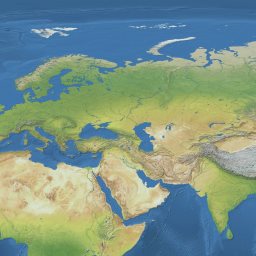
Every dot is a place Alexandre Colonna-Walewski is documented in, on a dated record. The interactive globe carries the full detail.
Where Alexandre Colonna-Walewski was documented, and when
4 May 1810exact date
Walewiceattested“Alexandre Florian Joseph Colonna Walewski was born on May 4, 1810, at Walewice, near Warsaw, to Countess Maria Walewska, the Polish noblewoman and mistress of Napoleon Bonaparte.”source: Wikipedia: Alexandre Colonna-Walewski
4 May 1810exact date
Warsawattested“Alexandre Florian Joseph Colonna Walewski was born on May 4, 1810, at Walewice, near Warsaw, to Countess Maria Walewska, the Polish noblewoman and mistress of Napoleon Bonaparte.”source: Wikipedia: Alexandre Colonna-Walewski
4 June 1846exact date
Florenceattested“Following her death in childbirth, he married secondly, on 4 June 1846 in Florence, Maria Anna di Ricci (Florence, 18 July 1823 - Paris, 18 November 1912), daughter of the Papal Count Zanobi di Ricci by his wife Princess Isabella Poniato…”source: Wikipedia: Alexandre Colonna-Walewski
4 June 1848exact date
Orléansattested“**Count Charles-Zanobi-Rodolphe Colonna-Walewski (Florence, 4 June 1848 – died on active service, Villers-Cotterêts, 2 October 1916), married in Orléans on 11 June 1885 Félicie Douay (Paris, 29 November 1860 – Versailles, 10 August 1952)…”source: Wikipedia: Alexandre Colonna-Walewski
27 September 1868exact date
Strasbourgattested“Alexandre Colonna-Walewski died of a stroke at Strasbourg on 27 September 1868 and is buried at Père Lachaise Cemetery in Paris.”source: Wikipedia: Alexandre Colonna-Walewski
27 September 1868exact date
Parisattested“Alexandre Colonna-Walewski died of a stroke at Strasbourg on 27 September 1868 and is buried at Père Lachaise Cemetery in Paris.”source: Wikipedia: Alexandre Colonna-Walewski
27 September 1868exact date
Père Lachaise Cemeteryattested“Alexandre Colonna-Walewski died of a stroke at Strasbourg on 27 September 1868 and is buried at Père Lachaise Cemetery in Paris.”source: Wikipedia: Alexandre Colonna-Walewski
Open Quo Fuit to see these 7 presences on the
globe, filter them by date, and follow the journey year by year.
Places Alexandre Colonna-Walewski is documented in
Other places tied to Alexandre Colonna-Walewski in the record
In each of these, a source puts Alexandre Colonna-Walewski and the place in the same dated sentence without stating
that Alexandre Colonna-Walewski was there. They are kept apart from the timeline above for exactly that reason:
a mention is not a presence, and Quo Fuit does not quietly promote one into the other.
1815year
Parismentioned“In early 1815, they returned to Paris before Napoleon departed for the Hundred Days campaign.”source: Wikipedia: Alexandre Colonna-Walewski
7 September 1816exact date
Brusselsmentioned“I would like Alexandre Walewski to enter the service of France as a soldier.” On September 7, 1816, Marie Walewska married Napoleon's cousin, Philippe Antoine d'Ornano, who had been exiled in Brussels for supporting Napoleon during the H…”source: Wikipedia: Alexandre Colonna-Walewski
1817year
Liègementioned“The family later moved to Liège, where Marie gave birth to another son, Rodolphe, in 1817.”source: Wikipedia: Alexandre Colonna-Walewski
1820year
Congress Polandmentioned“In 1820, at the age of ten, Alexandre left Poland for Geneva, where he attended boarding school for four years.”source: Wikipedia: Alexandre Colonna-Walewski
1830year
Congress Polandmentioned“Upon the accession of Louis-Philippe d'Orléans to the French throne in 1830, Walewski was dispatched to Poland, later the same year being entrusted by the leaders of the Polish November Uprising of 1830 as a diplomatic envoy to the Court…”source: Wikipedia: Alexandre Colonna-Walewski
1 December 1831exact date
Londonmentioned“He married firstly in London on 1 December 1831 Lady Catherine Montagu (London, 7 October 1808 – Paris, 30 April 1834), daughter of George Montagu, 6th Earl of Sandwich, by his wife Lady Louisa Lowry-Corry.”source: Wikipedia: Alexandre Colonna-Walewski
1840year
Theâtre Françaismentioned“He is said to have collaborated with the elder Dumas on Mademoiselle de Belle-Isle and a comedy of his, L'Ecole du monde, was produced at the Theâtre Français in 1840.”source: Wikipedia: Alexandre Colonna-Walewski
3 November 1844exact date
Parismentioned“*By Rachel Felix (1821–1858): **Count Alexandre-Antoine-Jean Colonna-Walewski (Marly-le-Roi, 3 November 1844 – Turin, 20 August 1898), recognized in 1844 and adopted by Walewski in 1860; Consul General of France; married in Paris on 17 N…”source: Wikipedia: Alexandre Colonna-Walewski
12 May 1847exact date
La Recoleta Cemeterymentioned“*By Maria Anna di Ricci: **Isabelle Colonna-Walewska (Buenos Aires, 12 May 1847 – Buenos Aires, 2 July 1847; it is believed that she is buried in La Recoleta Cemetery).”source: Wikipedia: Alexandre Colonna-Walewski
15 December 1849exact date
Parismentioned“**Élise Colonna-Walewska (Florence, 15 December 1849 – Paris, 14 March 1927) married in Paris on 10 October 1871 Félix, Count of Bourqueney (Constantinople, 25 April 1847 - La Chartre-sur-le-Loir, 17 June 1912); leaving issue.”source: Wikipedia: Alexandre Colonna-Walewski
1851year
Second French Empirementioned“Prince Louis Napoleon's accession to power in France as Napoleon III furthered his career with postings as envoy extraordinary to Florence, Grand Duchy of Tuscany, and the Kingdom of the Two Sicilies before London (1851–55), where he was…”source: Wikipedia: Alexandre Colonna-Walewski
1851year
Florencementioned“Prince Louis Napoleon's accession to power in France as Napoleon III furthered his career with postings as envoy extraordinary to Florence, Grand Duchy of Tuscany, and the Kingdom of the Two Sicilies before London (1851–55), where he was…”source: Wikipedia: Alexandre Colonna-Walewski
1855year
Parismentioned“In 1855, Walewski succeeded Drouyn de Lhuys as Minister of Foreign Affairs and he acted as President of, and French plenipotentiary at, the Congress of Paris the following year, leading to peace in the Crimean War and to the Paris Declar…”source: Wikipedia: Alexandre Colonna-Walewski
30 March 1856exact date
Parismentioned“**Eugénie Colonna-Walewska (Paris, 30 March 1856 – Arcachon, 22 December 1884), married in Paris on 15 July 1875 Frédéric, Count Mathéus (Écouis, 20 July 1846 - Paris, 25 February 1929); leaving issue.”source: Wikipedia: Alexandre Colonna-Walewski
Two people documented in the same place in the same year is a correlation, not a meeting.
Quo Fuit will never say they met without a source that says so.
How to read this page
Every line above is a dated fact taken from a source, with the sentence it came from and a link
back to it. Nothing is inferred, and a gap in the record is not evidence that someone was elsewhere.
A tag says how the fact is carried by its source: documented a structured,
explicitly dated record, attested a sentence that states the person was there,
mentioned a sentence that ties the person to the place without stating presence.
Sentences quoted from Wikipedia are available under CC BY-SA 4.0. Public domain books come from
Project Gutenberg. Quo Fuit claims no rights over these sources.
See Alexandre Colonna-Walewski on a 3D globe, filter the record by date, and cross this life with another to find
where the two overlap.