Quo Fuit places 4 dated presences for Alexandre Cabanel across 3 places, from 1839 to 1864.
Each one keeps the sentence it was taken from and a link to its source.
Alexandre Cabanel (28 September 1823 – 23 January 1889) was a French painter.Wikipedia, full article · CC BY-SA
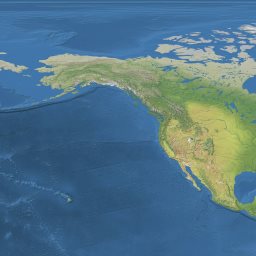
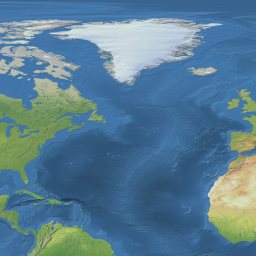
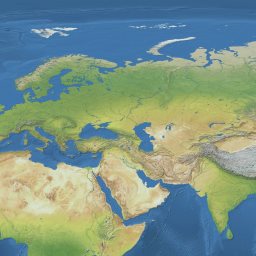
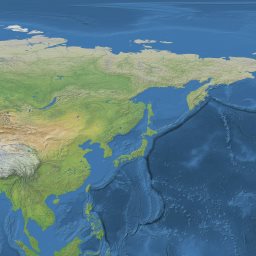
Every dot is a place Alexandre Cabanel is documented in, on a dated record. The interactive globe carries the full detail.
École Nationale Supérieure des Beaux-Artsattested“Cabanel entered the École des Beaux-Arts in Paris at the age of seventeen, in 1840, where he studied with François-Édouard Picot.”source: Wikipedia: Alexandre Cabanel
1840year
Parisattested“Cabanel entered the École des Beaux-Arts in Paris at the age of seventeen, in 1840, where he studied with François-Édouard Picot.”source: Wikipedia: Alexandre Cabanel
1864year
École des Beaux-Artsattested“He was appointed professor at the École des Beaux-Arts in 1864, where he taught until his death.”source: Wikipedia: Alexandre Cabanel
Open Quo Fuit to see these 4 presences on the
globe, filter them by date, and follow the journey year by year.
École Nationale Supérieure des Beaux-Arts1 presence · 1840
Other places tied to Alexandre Cabanel in the record
In each of these, a source puts Alexandre Cabanel and the place in the same dated sentence without stating
that Alexandre Cabanel was there. They are kept apart from the timeline above for exactly that reason:
a mention is not a presence, and Quo Fuit does not quietly promote one into the other.
1867year
Munichmentioned“At the Universal Exhibition of 1867, Cabanel was awarded the Knight's Cross of the First Class of the Order of Merit of Saint Michael of Bavaria, following his Paradise Lost, commissioned for the Maximilianeum, in Munich, by Ludwig II of…”source: Wikipedia: Alexandre Cabanel
1875year
Metropolitan Museum of Artmentioned“There is a smaller replica, painted in 1875 for a banker, John Wolf, now at the Metropolitan Museum of Art, in New York City.”source: Wikipedia: Alexandre Cabanel
1881year
Luxembourg Museummentioned“The acclaimed painting entered the Luxembourg Museum, in 1881, and is now held at the Musée d'Orsay, in Paris.”source: Wikipedia: Alexandre Cabanel
1881year
Parismentioned“The acclaimed painting entered the Luxembourg Museum, in 1881, and is now held at the Musée d'Orsay, in Paris.”source: Wikipedia: Alexandre Cabanel
26 January 1889exact date
Montpelliermentioned“His funeral took place in Paris, on 26 January 1889, in the Saint-Philippe du Roule church, then his body was transported to Montpellier, where it was buried in the Saint-Lazare on 28 January 1889.”source: Wikipedia: Alexandre Cabanel
26 January 1889exact date
Parismentioned“His funeral took place in Paris, on 26 January 1889, in the Saint-Philippe du Roule church, then his body was transported to Montpellier, where it was buried in the Saint-Lazare on 28 January 1889.”source: Wikipedia: Alexandre Cabanel
26 January 1889exact date
Saint-Philippementioned“His funeral took place in Paris, on 26 January 1889, in the Saint-Philippe du Roule church, then his body was transported to Montpellier, where it was buried in the Saint-Lazare on 28 January 1889.”source: Wikipedia: Alexandre Cabanel
Two people documented in the same place in the same year is a correlation, not a meeting.
Quo Fuit will never say they met without a source that says so.
How to read this page
Every line above is a dated fact taken from a source, with the sentence it came from and a link
back to it. Nothing is inferred, and a gap in the record is not evidence that someone was elsewhere.
A tag says how the fact is carried by its source: documented a structured,
explicitly dated record, attested a sentence that states the person was there,
mentioned a sentence that ties the person to the place without stating presence.
Sentences quoted from Wikipedia are available under CC BY-SA 4.0. Public domain books come from
Project Gutenberg. Quo Fuit claims no rights over these sources.
See Alexandre Cabanel on a 3D globe, filter the record by date, and cross this life with another to find
where the two overlap.