Quo Fuit places 5 dated presences for Agostinho Neto across 5 places, from 1922 to 1979.
Each one keeps the sentence it was taken from and a link to its source.
António Agostinho Neto Kilamba (17 September 1922 – 10 September 1979) was an Angolan communist revolutionary, politician and poet.Wikipedia, full article · CC BY-SA
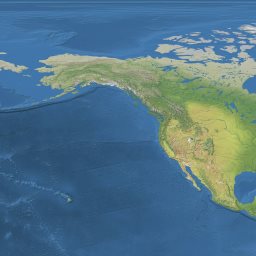
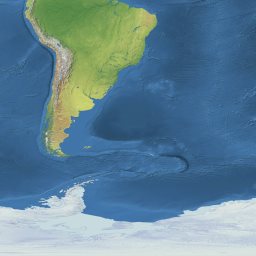
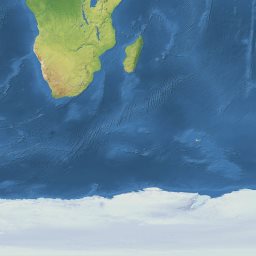
Every dot is a place Agostinho Neto is documented in, on a dated record. The interactive globe carries the full detail.
Where Agostinho Neto was documented, and when
17 September 1922exact date
Icolo e Bengo Provinceattested“Neto was born at Caxicane, in Ícolo e Bengo, a province of Portuguese Angola, on 17 September 1922, to parents who were both school teachers and Methodists.”source: Wikipedia: Agostinho Neto
1973year
Osloattested“Neto spent most of his time in 1973 in Europe, where he visited Oslo, in Norway, and on 2 July he was in Geneva.”source: Wikipedia: Agostinho Neto
1973year
Norwayattested“Neto spent most of his time in 1973 in Europe, where he visited Oslo, in Norway, and on 2 July he was in Geneva.”source: Wikipedia: Agostinho Neto
10 September 1979exact date
Moscowattested“Agostinho Neto died on 10 September 1979 in Moscow after travelling to the Soviet Union to undergo surgery for cancer and hepatitis.”source: Wikipedia: Agostinho Neto
10 September 1979exact date
Soviet Unionattested“Agostinho Neto died on 10 September 1979 in Moscow after travelling to the Soviet Union to undergo surgery for cancer and hepatitis.”source: Wikipedia: Agostinho Neto
Open Quo Fuit to see these 5 presences on the
globe, filter them by date, and follow the journey year by year.
In each of these, a source puts Agostinho Neto and the place in the same dated sentence without stating
that Agostinho Neto was there. They are kept apart from the timeline above for exactly that reason:
a mention is not a presence, and Quo Fuit does not quietly promote one into the other.
1946 to 1960period
Portugalmentioned“Agostinho Neto's poetic works were written chiefly between 1946 and 1960, largely in Portugal.”source: Wikipedia: Agostinho Neto
December 1956month
Angolamentioned“In December 1956, the Angolan Communist Party (PCA) merged with the Party of the United Struggle for Africans in Angola (PLUAA) to form the Popular Movement for the Liberation of Angola with Viriato da Cruz, the President of the PCA, as…”source: Wikipedia: Agostinho Neto
Angolamentioned“The Portuguese authorities in Angola arrested Neto on 8 June 1960.”source: Wikipedia: Agostinho Neto
1962year
Washington, D.C.mentioned“In 1962, Neto visited Washington, D.C., and asked the Kennedy administration for aid in his war against Portugal.”source: Wikipedia: Agostinho Neto
1965year
Cubamentioned“In 1965, Neto met Che Guevara and began receiving support from Cuba.”source: Wikipedia: Agostinho Neto
February 1973month
Romaniamentioned“In February 1973, Neto and MPLA visited Romania to meet with President Nicolae Ceaușescu on a four day official trip between 12–16 February, to discuss political matters in Africa.”source: Wikipedia: Agostinho Neto
19 July 1973exact date
Angolamentioned“On 15–16 July Tito and Ceausescu met in Yugoslavia to discuss the situation in Angola, whilst the leader of MPLA attended the 17–19 July 1973 for the Bulgarian Communist Party Plenum Committee, joined by his sister Ruth Neto and Dino Mat…”source: Wikipedia: Agostinho Neto
19 July 1973exact date
Socialist Federal Republic of Yugoslaviamentioned“On 15–16 July Tito and Ceausescu met in Yugoslavia to discuss the situation in Angola, whilst the leader of MPLA attended the 17–19 July 1973 for the Bulgarian Communist Party Plenum Committee, joined by his sister Ruth Neto and Dino Mat…”source: Wikipedia: Agostinho Neto
19 July 1973exact date
Bulgariamentioned“On 15–16 July Tito and Ceausescu met in Yugoslavia to discuss the situation in Angola, whilst the leader of MPLA attended the 17–19 July 1973 for the Bulgarian Communist Party Plenum Committee, joined by his sister Ruth Neto and Dino Mat…”source: Wikipedia: Agostinho Neto
April 1974month
Portugalmentioned“Following the Carnation Revolution in Portugal during April 1974 (which deposed Salazar's successor Marcelo Caetano), three political factions vied for Angolan power.”source: Wikipedia: Agostinho Neto
Two people documented in the same place in the same year is a correlation, not a meeting.
Quo Fuit will never say they met without a source that says so.
How to read this page
Every line above is a dated fact taken from a source, with the sentence it came from and a link
back to it. Nothing is inferred, and a gap in the record is not evidence that someone was elsewhere.
A tag says how the fact is carried by its source: documented a structured,
explicitly dated record, attested a sentence that states the person was there,
mentioned a sentence that ties the person to the place without stating presence.
Sentences quoted from Wikipedia are available under CC BY-SA 4.0. Public domain books come from
Project Gutenberg. Quo Fuit claims no rights over these sources.
See Agostinho Neto on a 3D globe, filter the record by date, and cross this life with another to find
where the two overlap.