Quo Fuit places 6 dated presences for Agha Mohammad Khan Qajar across 6 places, from 1742 to 1795.
Each one keeps the sentence it was taken from and a link to its source.
Agha Mohammad Khan Qajar (14 March 1742 – 17 June 1797), also known by his regnal name of Agha Mohammad Shah, was the founder of the Qajar dynasty of Iran, ruling as Shah from 1789 to 1797.Wikipedia, full article · CC BY-SA
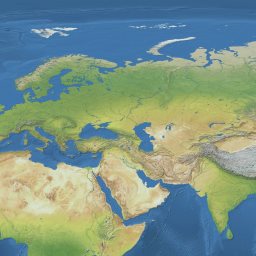
Every dot is a place Agha Mohammad Khan Qajar is documented in, on a dated record. The interactive globe carries the full detail.
Where Agha Mohammad Khan Qajar was documented, and when
Mashhadattested“When Nader Shah died in 1747, the Afsharid rule of Iran fell apart, which gave Mohammad Hasan an opportunity to seize Astarabad for himself, leading Nader Shah's nephew Adel Shah to march from Mashhad to the city in order to capture him.”source: Wikipedia: Agha Mohammad Khan Qajar
1786year
Tehranattested“In 1786, Agha Mohammad Khan moved his capital from Sari in his home province of Mazandaran to Tehran.”source: Wikipedia: Agha Mohammad Khan Qajar
1786year
Sari, Iranattested“In 1786, Agha Mohammad Khan moved his capital from Sari in his home province of Mazandaran to Tehran.”source: Wikipedia: Agha Mohammad Khan Qajar
9 August 1795exact date
Dagestanattested“Agha Mohammad Khan divided his army into three as he reached the Aras: the left wing was sent in the direction of Erivan; the right wing moved parallel to the Caspian Sea into the Mughan plain and across the lower Aras towards Dagestan a…”source: Wikipedia: Agha Mohammad Khan Qajar
9 August 1795exact date
Caspian Seaattested“Agha Mohammad Khan divided his army into three as he reached the Aras: the left wing was sent in the direction of Erivan; the right wing moved parallel to the Caspian Sea into the Mughan plain and across the lower Aras towards Dagestan a…”source: Wikipedia: Agha Mohammad Khan Qajar
Open Quo Fuit to see these 6 presences on the
globe, filter them by date, and follow the journey year by year.
Other places tied to Agha Mohammad Khan Qajar in the record
In each of these, a source puts Agha Mohammad Khan Qajar and the place in the same dated sentence without stating
that Agha Mohammad Khan Qajar was there. They are kept apart from the timeline above for exactly that reason:
a mention is not a presence, and Quo Fuit does not quietly promote one into the other.
1780year
Larijan Districtmentioned“In Autumn 1780 Reza Qoli invaded Babol with an army of men from Larijan, where he encircled Agha Mohammad Khan's house and captured him after a fight lasting several hours.”source: Wikipedia: Agha Mohammad Khan Qajar
1 January 1781exact date
Babolmentioned“When Morteza Qoli learned of this, he marched to Babol on 1 January 1781 with an army of Turkmens and released Agha Mohammad Khan.”source: Wikipedia: Agha Mohammad Khan Qajar
1781year
Behshahrmentioned“In 1781, the Russian Empire, which was interested in building a trade route with Iran in order to be able to trade with regions deep into Asia, sent an emissary under Marko Ivanovich Voinovich to the coast of Gorgan, where he arrived on…”source: Wikipedia: Agha Mohammad Khan Qajar
13 January 1782exact date
Astarabadmentioned“Instead, he tricked Voinovich and some of his men into meeting him at Astarabad for a banquet on 26 December, where they were held as captives until Voinovich agreed to order his men to leave Ashurada on 13 January 1782.”source: Wikipedia: Agha Mohammad Khan Qajar
June 1784month
Mazandaranmentioned“The next year Ali-Morad Khan, in retaliation for Agha Mohammad Khan's attack on Tehran the previous year sent a huge army reportedly numbering 60,000 to Mazandaran in June 1784, aiming to crush the Qajars once and for all.”source: Wikipedia: Agha Mohammad Khan Qajar
January 1786month
Kashanmentioned“He then sent troops towards Kashan and Qom, while he marched towards Hamadan in early January 1786.”source: Wikipedia: Agha Mohammad Khan Qajar
January 1786month
Hamadanmentioned“He then sent troops towards Kashan and Qom, while he marched towards Hamadan in early January 1786.”source: Wikipedia: Agha Mohammad Khan Qajar
1788year
Isfahanmentioned“He met Jafar Qoli Khan at Isfahan in 1788, and after some time, made Taqi Khan accept Qajar suzerainty, and thereafter punished some Qashqai tribes, who fled into the mountains.”source: Wikipedia: Agha Mohammad Khan Qajar
25 June 1789exact date
Shirazmentioned“A battle was fought on 25 June 1789, which ended in Lotf Ali Khan withdrawing to Shiraz while Agha Mohammad Khan followed him and besieged the city.”source: Wikipedia: Agha Mohammad Khan Qajar
Azerbaijan (Iran)mentioned“He appointed Baba Khan as the governor of Persian Iraq and marched into Azerbaijan in the spring of 1791.”source: Wikipedia: Agha Mohammad Khan Qajar
June 1792month
Bushehrmentioned“He also attempted to take Khesht from January to June 1792, but his attempt to capture it failed and he returned to Bushehr on 27 June.”source: Wikipedia: Agha Mohammad Khan Qajar
5 June 1792exact date
Persepolismentioned“On 5 June 1792, Lotf Ali Khan, with a small force of his men, made a bold night raid on Agha Mohammad Khan's encampment near Persepolis.”source: Wikipedia: Agha Mohammad Khan Qajar
21 July 1792exact date
Shirazmentioned“Agha Mohammad Khan set foot in Shiraz on 21 July 1792, and stayed there for a month, maintaining his retinue in the Bagh-e Vakil.”source: Wikipedia: Agha Mohammad Khan Qajar
Every line above is a dated fact taken from a source, with the sentence it came from and a link
back to it. Nothing is inferred, and a gap in the record is not evidence that someone was elsewhere.
A tag says how the fact is carried by its source: documented a structured,
explicitly dated record, attested a sentence that states the person was there,
mentioned a sentence that ties the person to the place without stating presence.
Sentences quoted from Wikipedia are available under CC BY-SA 4.0. Public domain books come from
Project Gutenberg. Quo Fuit claims no rights over these sources.
See Agha Mohammad Khan Qajar on a 3D globe, filter the record by date, and cross this life with another to find
where the two overlap.