Quo Fuit places 3 dated presences for Adolph Wagner across 3 places, from 1857 to 1917.
Each one keeps the sentence it was taken from and a link to its source.
Adolph Wagner (25 March 1835 – 8 November 1917) was a German economist and politician, a leading Kathedersozialist (academic socialist) and public finance scholar and advocate of agrarianism.Wikipedia, full article · CC BY-SA
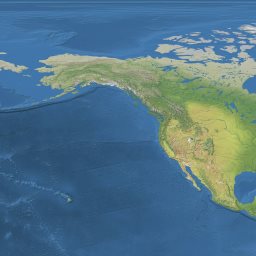
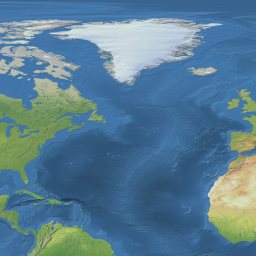
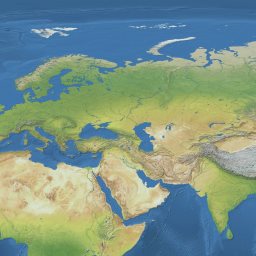
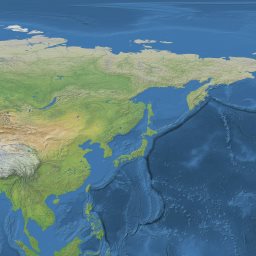
Every dot is a place Adolph Wagner is documented in, on a dated record. The interactive globe carries the full detail.
Where Adolph Wagner was documented, and when
1857year
Erlangenattested“Born in Erlangen as the son of a university professor, the physiologist Rudolf Wagner, Adolph studied economics at the University of Göttingen, receiving a doctorate in 1857 under supervision of .”source: Wikipedia: Adolph Wagner
1857year
University of Göttingenattested“Born in Erlangen as the son of a university professor, the physiologist Rudolf Wagner, Adolph studied economics at the University of Göttingen, receiving a doctorate in 1857 under supervision of .”source: Wikipedia: Adolph Wagner
In each of these, a source puts Adolph Wagner and the place in the same dated sentence without stating
that Adolph Wagner was there. They are kept apart from the timeline above for exactly that reason:
a mention is not a presence, and Quo Fuit does not quietly promote one into the other.
1858 to 1865period
University of Viennamentioned“Wagner's academic career took him first to the Merchants’ Superior School, Vienna (1858–1863), then – after failing to secure a chair at the University of Vienna because of disagreements over fiscal policy with Lorenz von Stein – to the…”source: Wikipedia: Adolph Wagner
1858 to 1865period
Hamburgmentioned“Wagner's academic career took him first to the Merchants’ Superior School, Vienna (1858–1863), then – after failing to secure a chair at the University of Vienna because of disagreements over fiscal policy with Lorenz von Stein – to the…”source: Wikipedia: Adolph Wagner
1865year
Imperial University of Dorpatmentioned“In 1865, he took the chair of Ethnography, Geography, and Statistics (in reality an economics professorship) at the Imperial University of Dorpat in Livonia which is located in the present day Estonia, but was then part of the Russian Em…”source: Wikipedia: Adolph Wagner
1868year
Germanymentioned“Beginning Fall Term 1868/69, Wagner therefore took over the Chair of the Cameralistic subjects (roughly, state management) at the Badensian University of Freiburg im Breisgau, and very soon afterwards, in 1870, the Chair of Staatswissens…”source: Wikipedia: Adolph Wagner
1868year
Grand Duchy of Badenmentioned“Beginning Fall Term 1868/69, Wagner therefore took over the Chair of the Cameralistic subjects (roughly, state management) at the Badensian University of Freiburg im Breisgau, and very soon afterwards, in 1870, the Chair of Staatswissens…”source: Wikipedia: Adolph Wagner
1868year
Humboldt Universitymentioned“Beginning Fall Term 1868/69, Wagner therefore took over the Chair of the Cameralistic subjects (roughly, state management) at the Badensian University of Freiburg im Breisgau, and very soon afterwards, in 1870, the Chair of Staatswissens…”source: Wikipedia: Adolph Wagner
Two people documented in the same place in the same year is a correlation, not a meeting.
Quo Fuit will never say they met without a source that says so.
How to read this page
Every line above is a dated fact taken from a source, with the sentence it came from and a link
back to it. Nothing is inferred, and a gap in the record is not evidence that someone was elsewhere.
A tag says how the fact is carried by its source: documented a structured,
explicitly dated record, attested a sentence that states the person was there,
mentioned a sentence that ties the person to the place without stating presence.
Sentences quoted from Wikipedia are available under CC BY-SA 4.0. Public domain books come from
Project Gutenberg. Quo Fuit claims no rights over these sources.
See Adolph Wagner on a 3D globe, filter the record by date, and cross this life with another to find
where the two overlap.