quofuit

Adam Johann von Krusenstern

1770 to 1846 4 documented presences 4 places

Quo Fuit places 4 dated presences for Adam Johann von Krusenstern across 4 places, from 1803 to 1846. Each one keeps the sentence it was taken from and a link to its source.

Adam Johann von Krusenstern (10 October 1770 to 12 August 1846) was a Russian admiral and explorer of Swedish and Baltic German descent, who led the first Russian circumnavigation of the Earth in 1803–1806.Wikipedia, full article · CC BY-SA
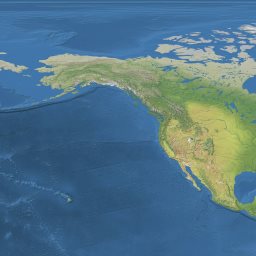
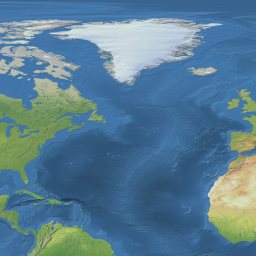
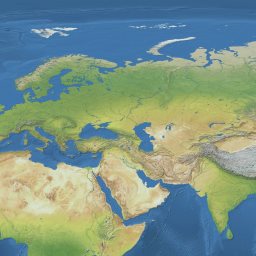
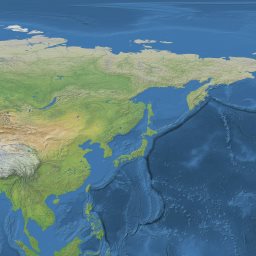
Every dot is a place Adam Johann von Krusenstern is documented in, on a dated record. The interactive globe carries the full detail.

Where Adam Johann von Krusenstern was documented, and when

1803year
Saint Petersburgattested “Upon his return, Krusenstern wrote a detailed report, "Reise um die Welt in den Jahren 1803, 1804, 1805 und 1806 auf Befehl Seiner Kaiserlichen Majestät Alexanders des Ersten auf den Schiffen Nadeschda und Newa" ("Journey around the Worl…” source: Wikipedia: Adam Johann von Krusenstern
1846year
Kiltsiattested “He died in 1846 in Kiltsi manor, an Estonian manor he had purchased in 1816, and was buried in Tallinn Cathedral.” source: Wikipedia: Adam Johann von Krusenstern
1846year
Kiltsi Manorattested “He died in 1846 in Kiltsi manor, an Estonian manor he had purchased in 1816, and was buried in Tallinn Cathedral.” source: Wikipedia: Adam Johann von Krusenstern
1846year
St. Mary's Cathedral, Tallinnattested “He died in 1846 in Kiltsi manor, an Estonian manor he had purchased in 1816, and was buried in Tallinn Cathedral.” source: Wikipedia: Adam Johann von Krusenstern

Open Quo Fuit to see these 4 presences on the globe, filter them by date, and follow the journey year by year.

Places Adam Johann von Krusenstern is documented in

Saint Petersburg1 presence · 1803
Kiltsi1 presence · 1846
Kiltsi Manor1 presence · 1846
St. Mary's Cathedral, Tallinn1 presence · 1846

Other places tied to Adam Johann von Krusenstern in the record

In each of these, a source puts Adam Johann von Krusenstern and the place in the same dated sentence without stating that Adam Johann von Krusenstern was there. They are kept apart from the timeline above for exactly that reason: a mention is not a presence, and Quo Fuit does not quietly promote one into the other.

1793 to 1799period
Americamentioned “Subsequently, he served in the British Royal Navy between 1793 and 1799, visiting America, India and China.” source: Wikipedia: Adam Johann von Krusenstern
1811year
Berlinmentioned “It was published in 1811-1812 in Berlin.” source: Wikipedia: Adam Johann von Krusenstern
1813year
Londonmentioned “This was followed by an English translation, published in London in 1813 and subsequently by French, Dutch, Danish, Swedish, and Italian translations.” source: Wikipedia: Adam Johann von Krusenstern
1816 to 1824period
American Philosophical Societymentioned “He was elected a foreign member of the Royal Swedish Academy of Sciences 1816 and to the American Philosophical Society in 1824.” source: Wikipedia: Adam Johann von Krusenstern
1827year
Saint Petersburgmentioned “His scientific work, which includes an atlas of the Pacific, was published in 1827 in Saint Petersburg.” source: Wikipedia: Adam Johann von Krusenstern

How to read this page

Every line above is a dated fact taken from a source, with the sentence it came from and a link back to it. Nothing is inferred, and a gap in the record is not evidence that someone was elsewhere.

A tag says how the fact is carried by its source: documented a structured, explicitly dated record, attested a sentence that states the person was there, mentioned a sentence that ties the person to the place without stating presence.

Sources

Sentences quoted from Wikipedia are available under CC BY-SA 4.0. Public domain books come from Project Gutenberg. Quo Fuit claims no rights over these sources.

See Adam Johann von Krusenstern on a 3D globe, filter the record by date, and cross this life with another to find where the two overlap.

Open Adam Johann von Krusenstern on the globe